Kiwi.com is a travel tech company that helps travelers book flights worldwide. Known for its innovative Virtual Interlining technology, Kiwi.com combines flights from airlines that don’t normally cooperate, allowing customers to find cheaper and more flexible travel options. By 2024, Kiwi.com was selling an average of over 50,000 seats daily.
''Change trip'' (Voluntary Flight Changes) feature has not been touched in the past +5 years 🦕. In June 2022 within the Regular Usability Testing we found several usability issues 😕. This is a prominent CS contact reason with: 500 messages & 200 calls a day and 60% of customers asking for a flight change price & options do not pay for it in the end.
I was design co-owner of this discovery and led the workshop where we collaborated with ux researchers, engineers and product manager to deide on the future ideal experience that would align with business needs.
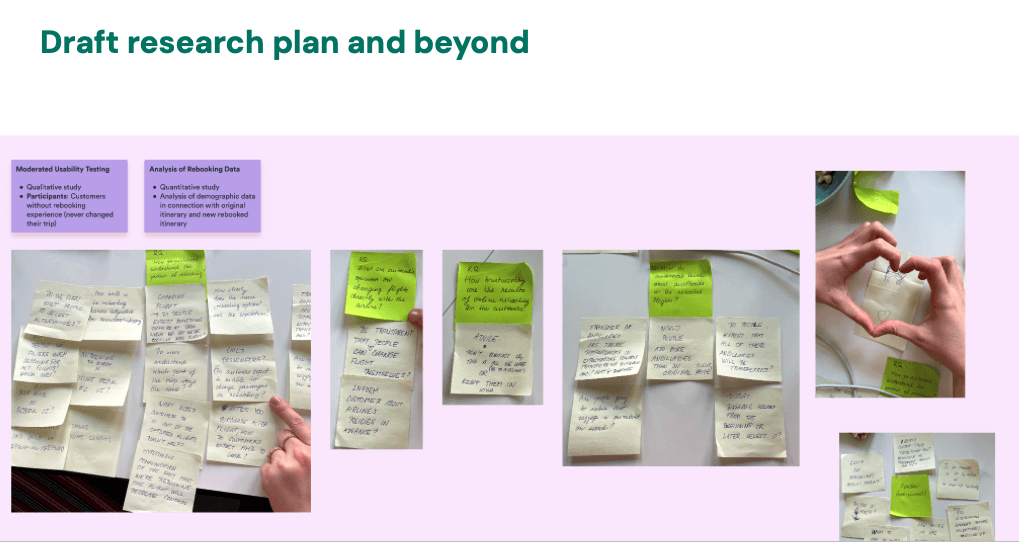
Session replay analysis
Secondary research of customer comments
Unstructured interviews with CS agents
Where people look for the option to change their trip?
Why users want to change their booking?
What are the users expectations on price of voluntary change?
How users perceive the results of change trip search?
When users contact CS for help with the trip change? Why?
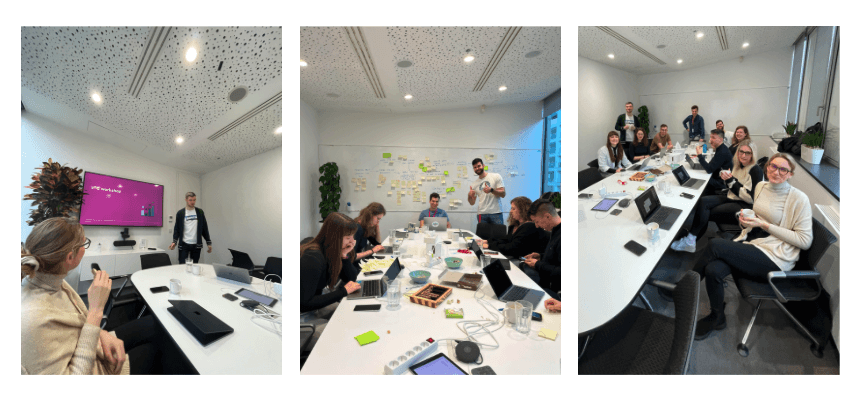
Before redesigning this feature, we needed to understand and align on why it was failing and what the redesign should actually aim to fix. So we decided to run a cross-functional discovery workshop with Design, Engineering, Product and Research in the same room.
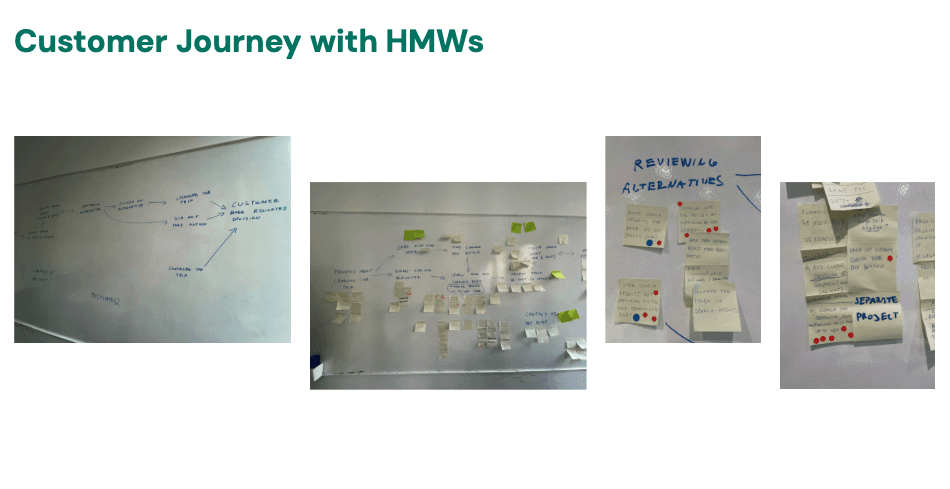
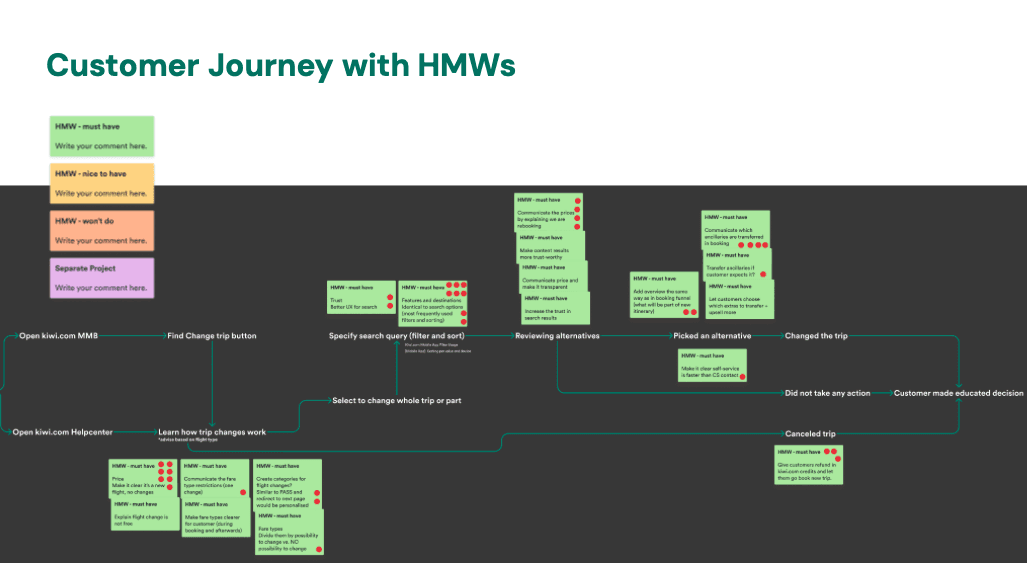
We started by mapping the existing customer journey - to capture the real experience end-to-end. Next, we layered in existing research insights and usability problems at the relevant touchpoints. Quotes, behavioural patterns and support findings grounded the map in real behaviour rather than assumptions. This clearly exposed where users hesitate, postpone decisions or abandon the process.
From those moments we created How-Might-We statements tied to specific Jobs-To-Be-Done, and voted on the most impactful opportunities to focus the team on a shared direction.
Brainstorming
The second day focused on testing different solutions.
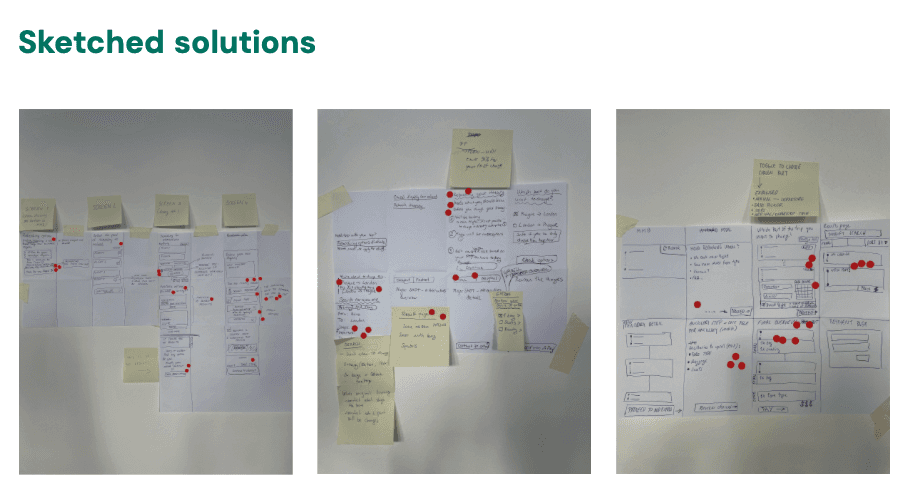
With the key problems and priorities agreed, we moved into structured brainstorming. Everyone sketched ideas individually first to avoid groupthink, then shared and discussed them together.
We compared approaches based on how well they addressed the identified Jobs-To-Be-Done and reduced the moments of uncertainty uncovered in the journey map.
After discussion, we voted again to identify the concepts most likely to solve the core problems while remaining feasible to build.
Prototyping
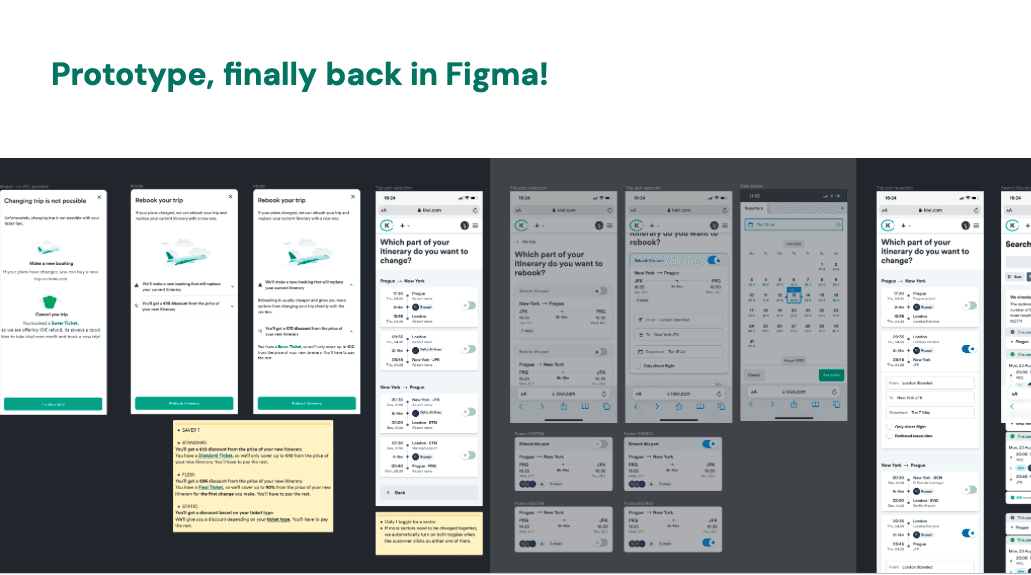
Finally, we moved from the physical workshop into Figma to quickly test the chosen directions.
Outcome - Rethinking the Feature
The workshop concluded with several hypotheses to validate through prototyping and testing.
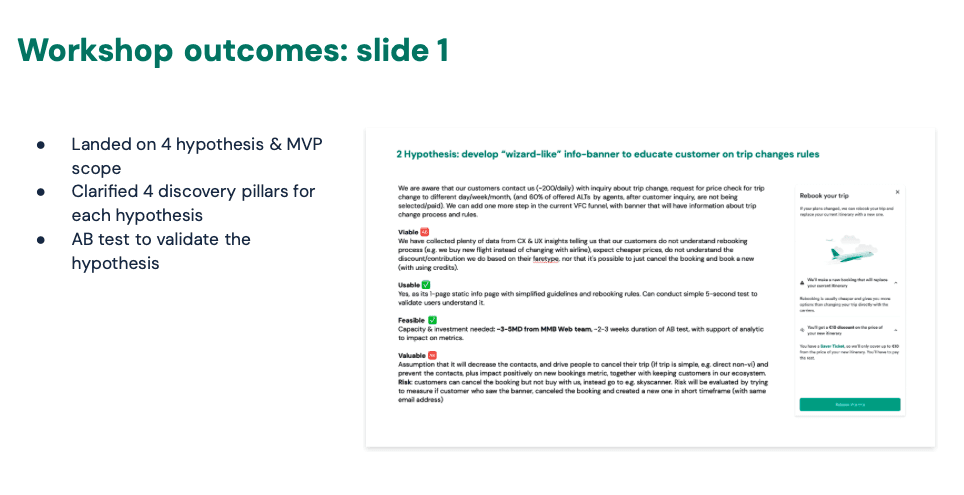
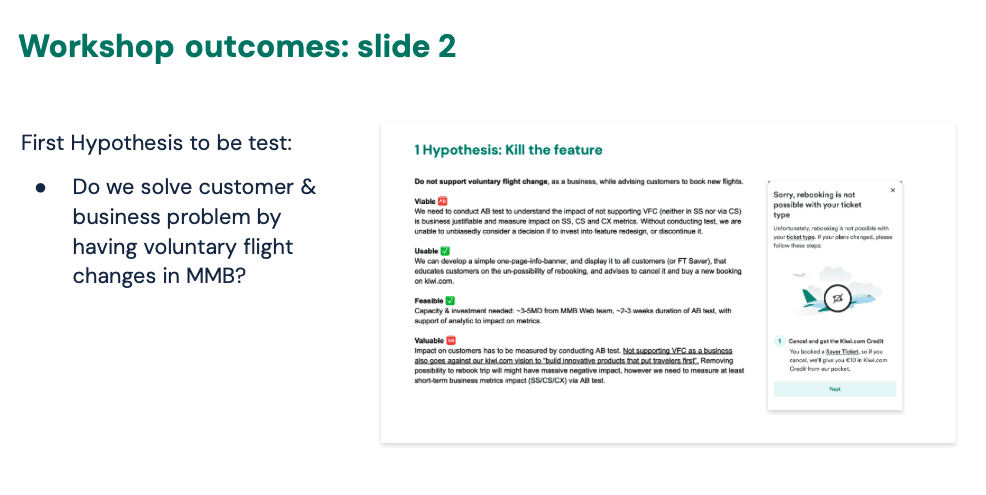
Surprisingly, when we evaluated the concepts against business priorities, user needs and technical feasibility, a clearer solution emerged.
Rebuilding the existing voluntary change flow would mean recreating a complex flight search inside the feature - something the main search already handled better and would continue to evolve. Maintaining two parallel systems would add long-term cost and complexity, while research showed many users were only ''window-shopping'' and exploring options rather than actually changing their flight.
Instead of rebuilding the feature, we proposed a different approach: Remove the dedicated change flow and provide users with credits they could use to rebook directly in the main search experience.
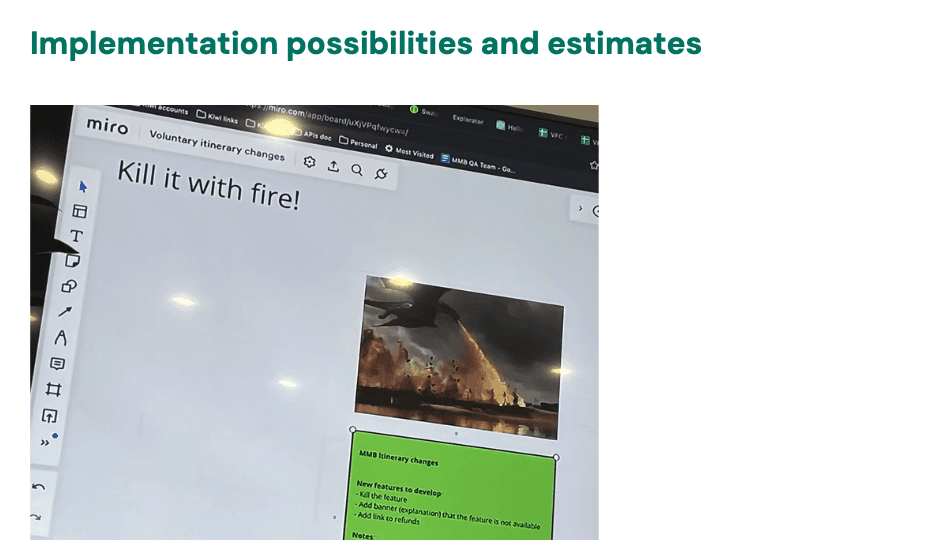
The impact:
reduced engineering and maintenance cost
freed product capacity for higher-value improvements
removed a confusing, half-functional experience
guided users to a clearer and more flexible way to rebook
Rather than improving a problematic tool, we found out how to eliminated the need for it - and replaced it with a solution that worked better for both the business and the user.
Team Feedback

Designed by Kat • 2024