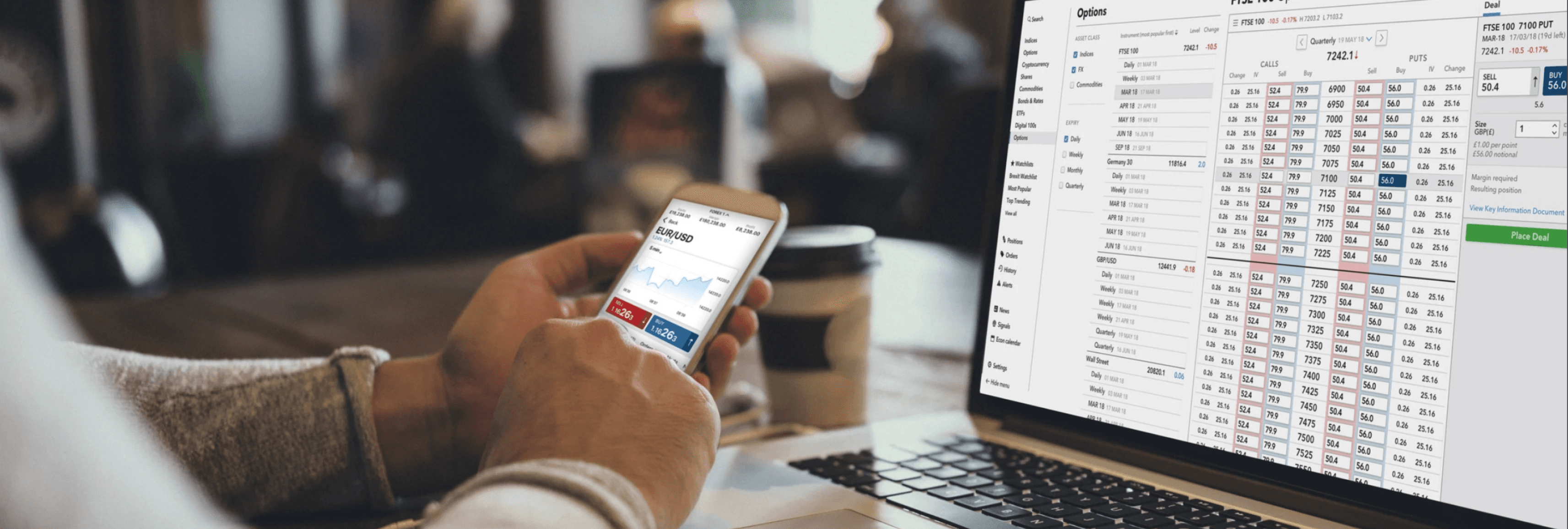
Trading is hard. Designing a trading platform isn't any easier. As a product designer, I spent 2+ years at IG Group redesigning the mobile trading experience for 558,000+ active investors across iOS, Android and web. Created the long-term vision for native-first mobile trading, defining key user journeys, interaction patterns and in-app communication. A concept-to-roadmap project with 18–24 month implementation cycles - I focus here on the design decisions and what was adopted rather than post-launch metrics
My Role:
Product Designer
(UX & UI focused)
Team
UX Senior Designer
2 Product Manager
Engineering Lead
10+ Mobile Engineers
Data Analyst
Content Writer
Ux Researcher
Scope:
iOS · Android · iPad · PWA
Vision & Implementation
IG GROUP is established member of the FTSE 100 with a market capitalisation of £2.1 billion. It's the no.1 provider of CFDs and spread betting worldwide, with offices located in 17 countries. IG gives over 150,000 retail investors leveraged access to over 150,000 financial markets through an award winning dealing platform and mobile apps.
The aim of the project was to create a long-term vision for mobile. A set of core concepts that could be integrated into the apps within 18–24 months. IG's mobile trading apps hadn't been redesigned for years, looking tired and there was a desire to create a product that would be truly innovative.
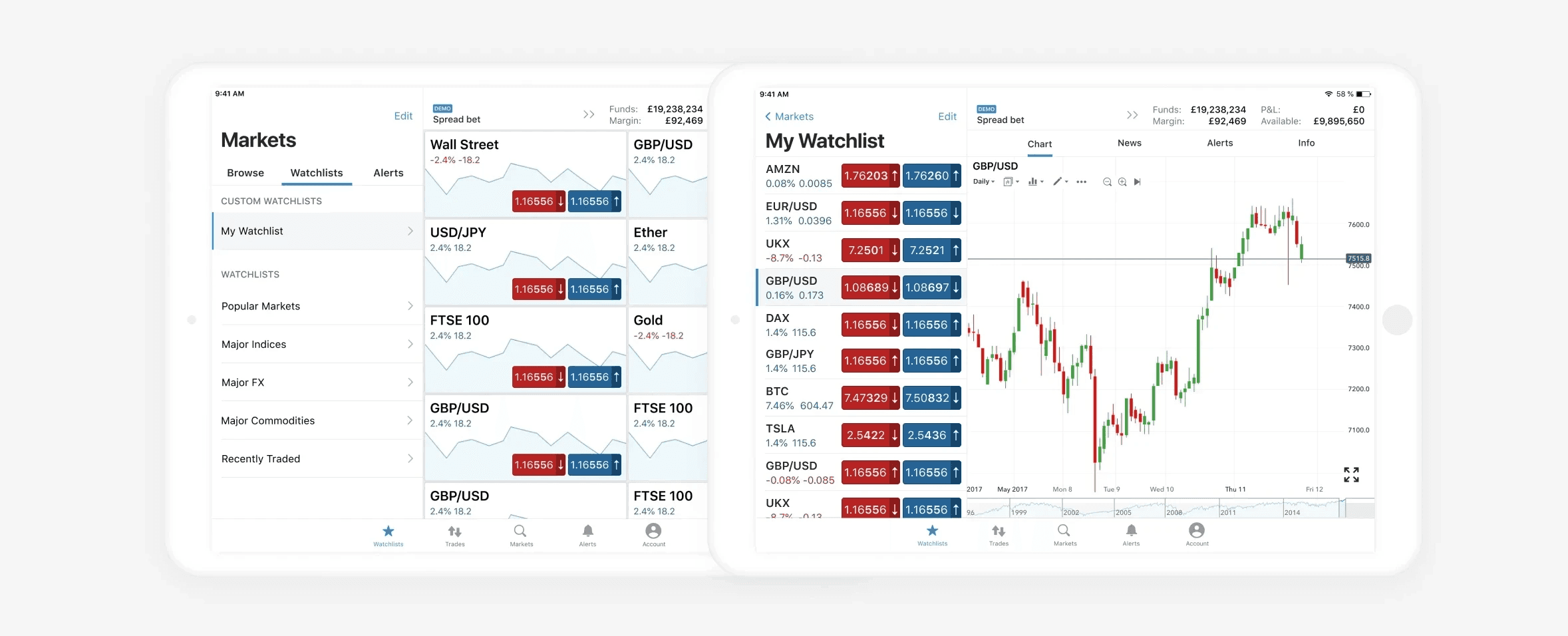
My primary role in the project was to create the UI vision designs for IG's mobile products. Bring the visual style to 21st century and create consistent experience across all platforms, this includes iOS both iPhone & iPad, Android and a progressive web app.
Old design
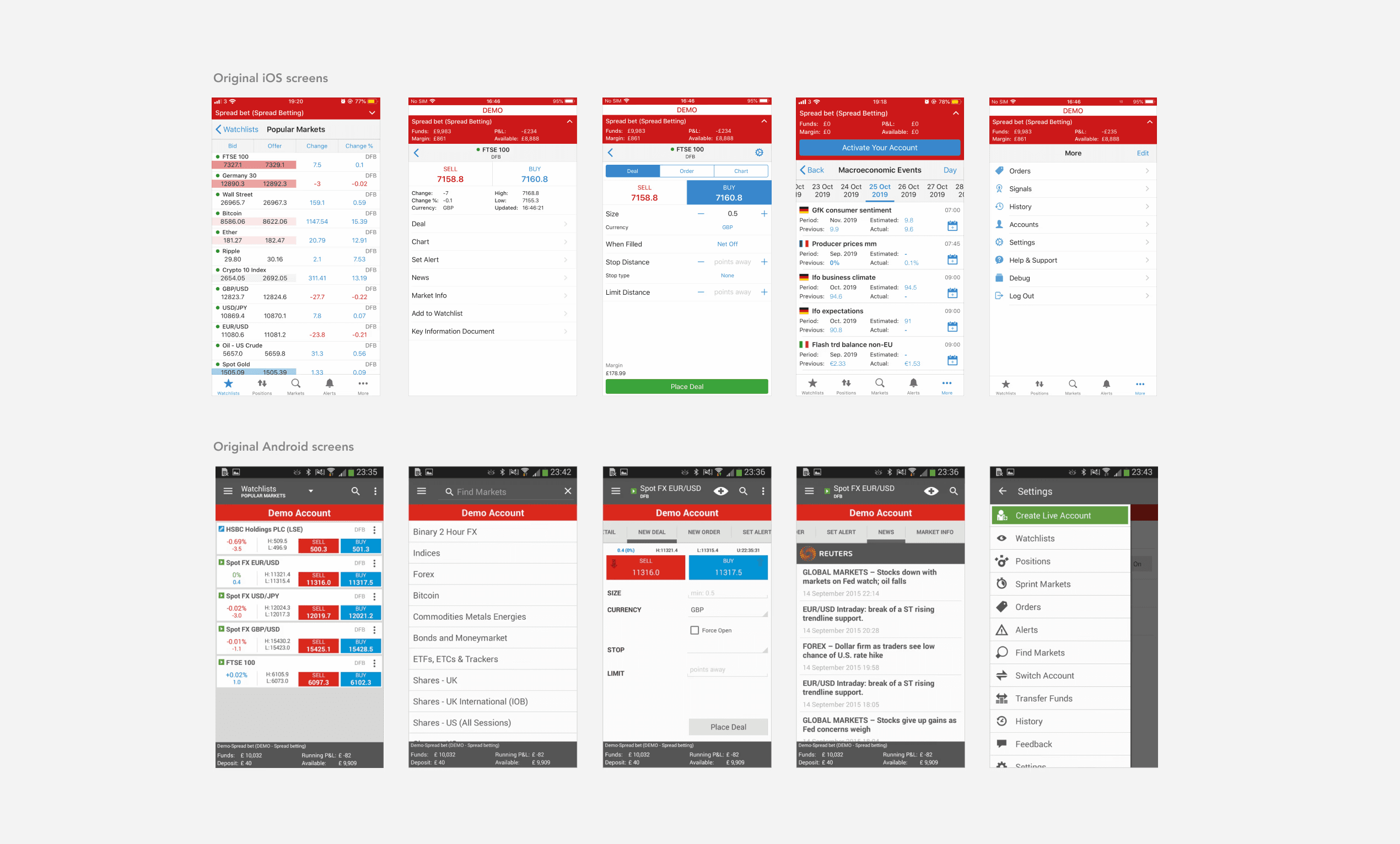
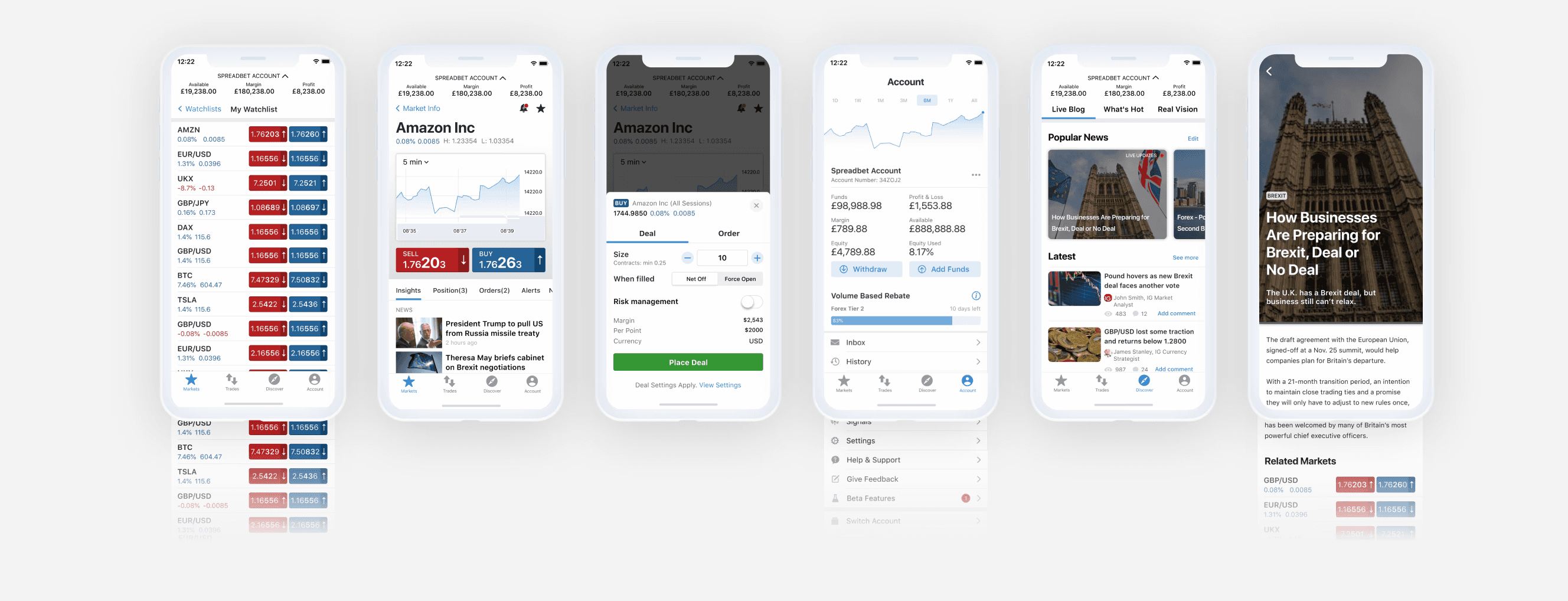
Native apps should feel like part of your device, using default fonts, components and transitions where possible. This avoids redesigning common patterns such as toggles or list and allows designers to focus on trading-specific elements. Here time can be spent perfecting interactions and creating an experience that feels unique.
To focus our efforts we identified four key users tasks. These 'red routes' are the foundational user journeys that made our product most valuable and captured 90% of our traders' actions.
01 • Register and manage an account
02 • Identify opportunities to trade
03 • Open a new position
04 • Monitor, edit and close positions
iOS mobile app redesign
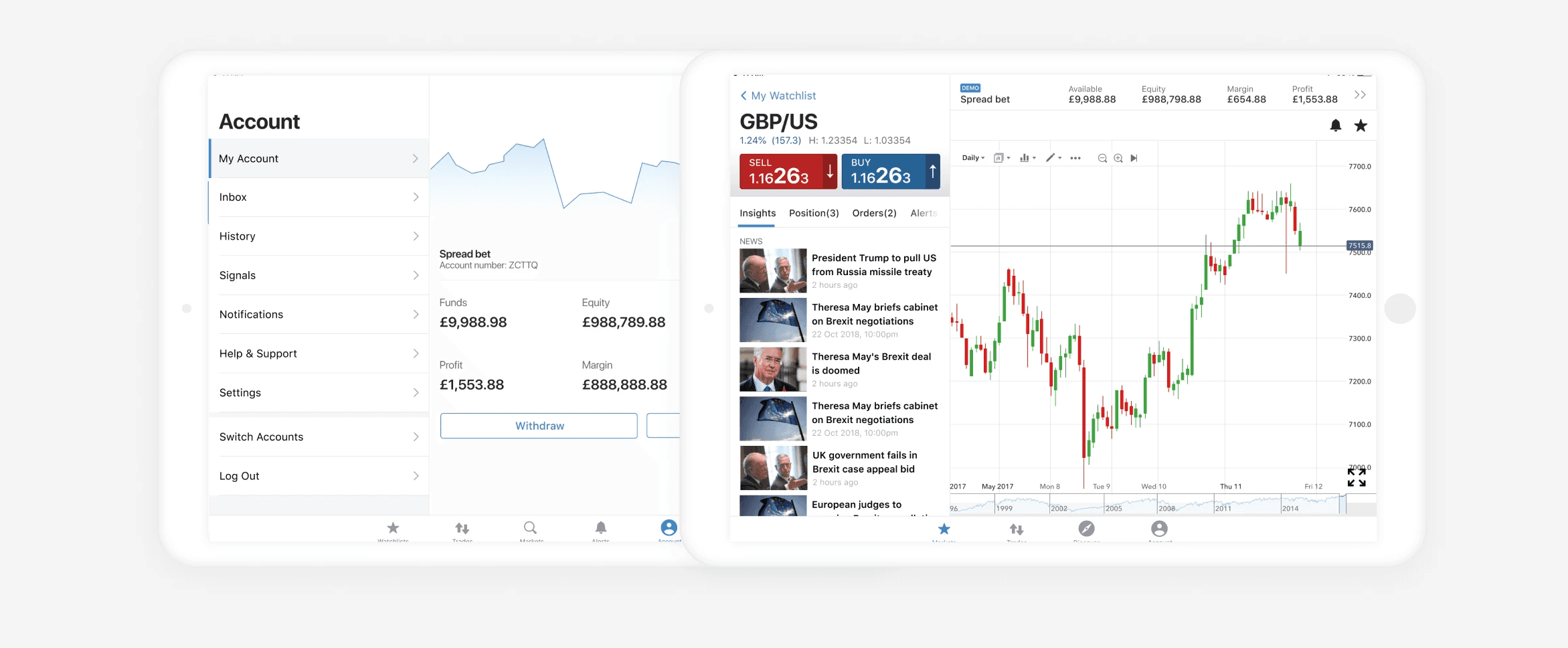
iPad redesign
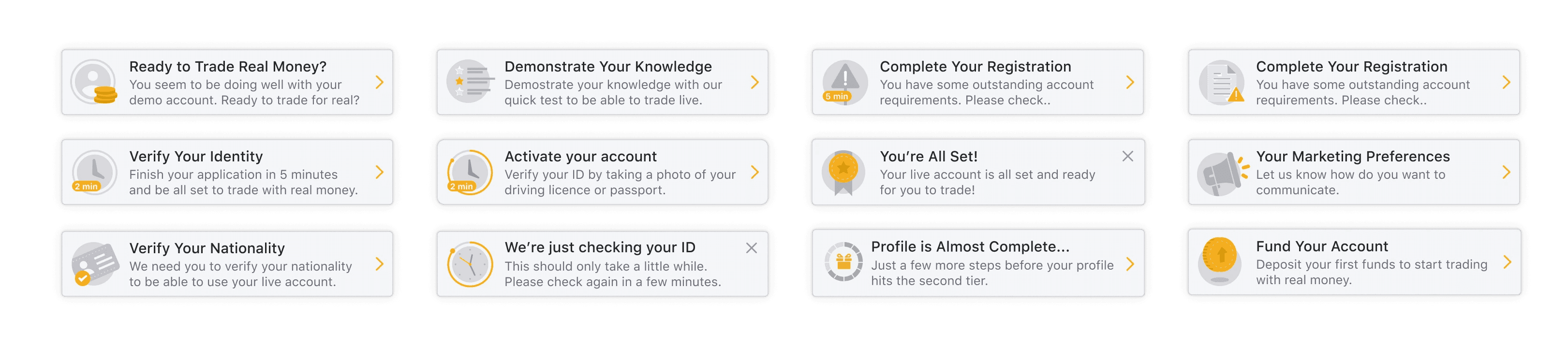
One crucial thing that I was really keen to improve is the in-app communication with our users, which was pretty non-existent at that time. Efficient communication in the form of notifications, banners and other messages - informing users about recent changes, new features or some outstanding requirements they might have. One of it was a 'Pending Requirements' banner with title and a brief description of the task. Using hints of yellow color ( our attention colour) in simple & consistent graphics to make it more eye-catching...
One of the biggest risks of the project was investing in solutions that could become technologically redundant. Due to the long timelines, the proposed concepts would need to stand the test of time. Our best bet was to focus on creating robust design principles and execute them using the latest mobile technologies.
Working closely with the development teams we regularly created proof of concepts based on the latest OS capabilities. We integrated features such as biometric verification, inline payments and native widgets to make key user tasks as frictionless as possible.
This was a long-horizon vision project at a large financial institution. Due to regulatory sensitivity and the complexity of the platform, design-to-launch cycles spanned 18–24 months. I moved on before post-launch data became available, but since I closely watched the product months after, I could see the designs fed directly into IG's mobile product roadmap and production.
Designed by Kat • 2026