



My Role
Product Designer
Team
Product Manager
Engineering Lead
3 Engineers
Data Analyst
Customer Support Operations
Disruptions specialist
Ux Researcher
Scope
End-to-end redesign and
further iterations
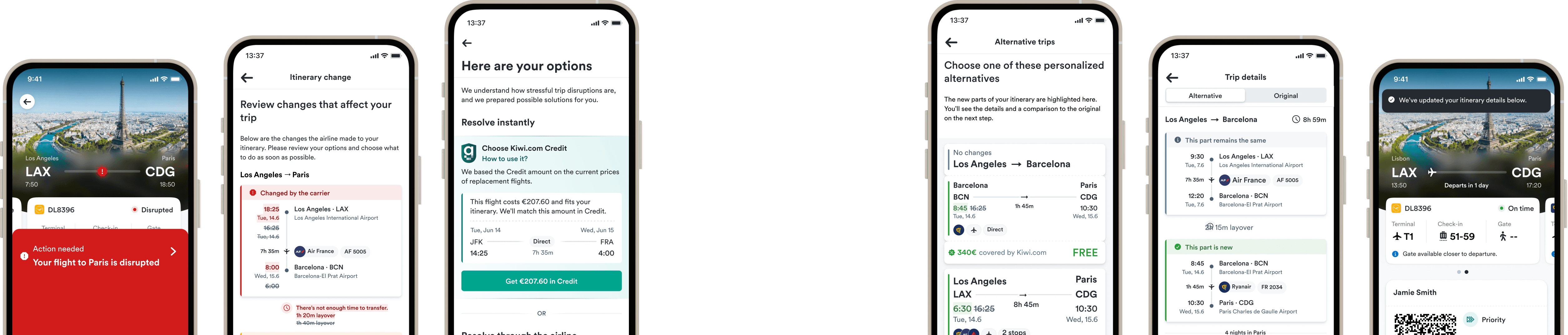
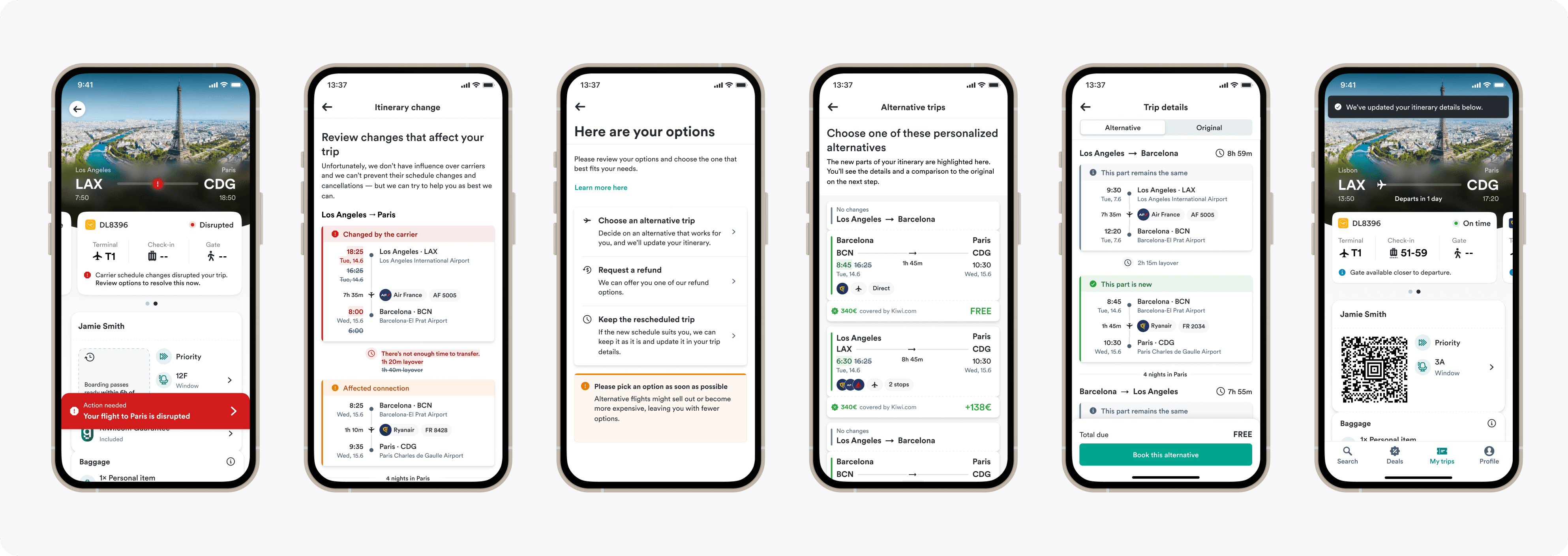
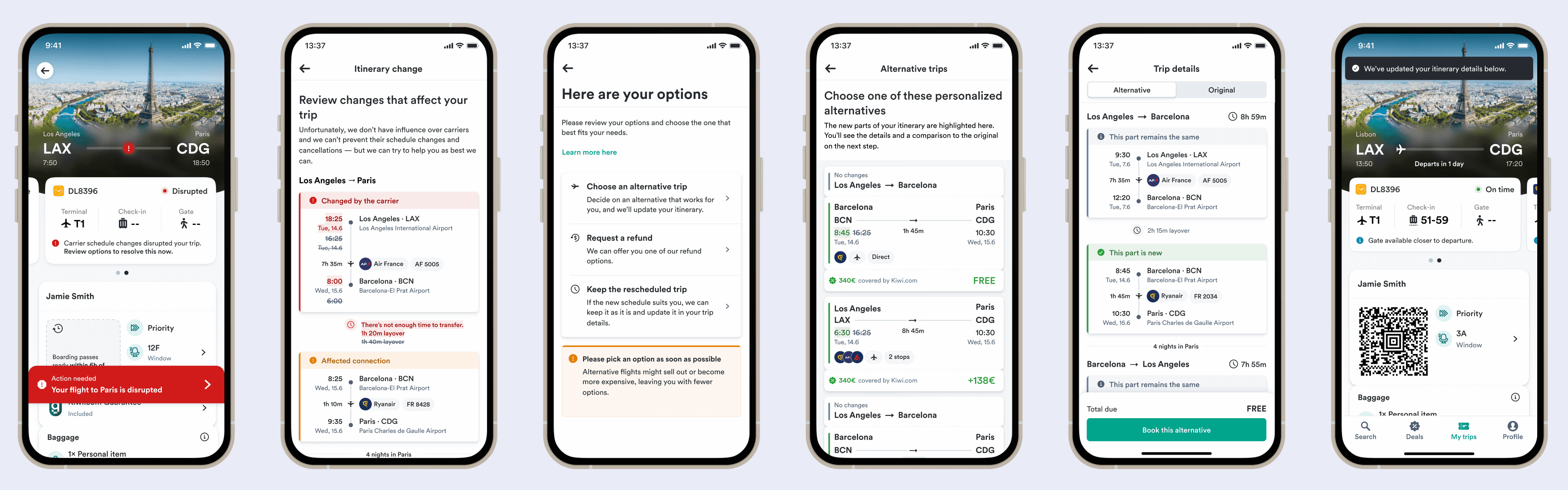
I redesigned Kiwi.com's flight schedule-change flow to make disruption handling clear and easy to manage in the app. Introduced clearer disruption communication, reusable result-card layouts aligned with the design system, and mobile-first improvements - resulting in a 15pp increase in self-resolved breaking disruptions (from 47% to 62%), higher customer satisfaction, and faster iteration capability for the team.
Kiwi.com is a global flight booking platform selling 50,000+ seats daily. Its core technology, Virtual Interlining, combines flights from airlines that don't normally cooperate, unlocking cheaper and more flexible routes for travellers worldwide.
Flight disruptions by the carrier are an inevitable part of travel, but handling them shouldn't be a headache. Cancellations, reschedules, and last-minute delays can turn a well-planned trip into a stressful experience. At Kiwi.com, we set out to improve that. Our goal? To give customers a clear, simple, and stress-free way to manage airline schedule changes, without needing to contact support.
I took over the design ownership of the SHOT (Schedule Handling Operations Tool) team and joined redesign mid-project and helped drive it through final delivery, handoff, release, and multiple iterations based on real data and user feedback. Collaborating with UX researchers, engineers, and product managers, we transformed a fragmented process into an intuitive, self-service experience.
To help travelers navigate flight disruptions, Kiwi.com offers an optional protection servicev - Kiwi.com Guarantee (now Disruption Protection). When purchased, it allows Kiwi.com to immediately provide free alternative flights, ensuring a smooth itinerary without the hassle of waiting or dealing with airlines directly.
This meant we had to design an experience that worked for both types of users - those covered by the Guarantee and those handling disruptions without this coverage.
To deeply understand user frustrations, I gathered:
Benchmarked industry best practices in disruption management.
Existing research insights to pinpoint common issues.
Ran usability tests to observe where customers struggled during design discovery.
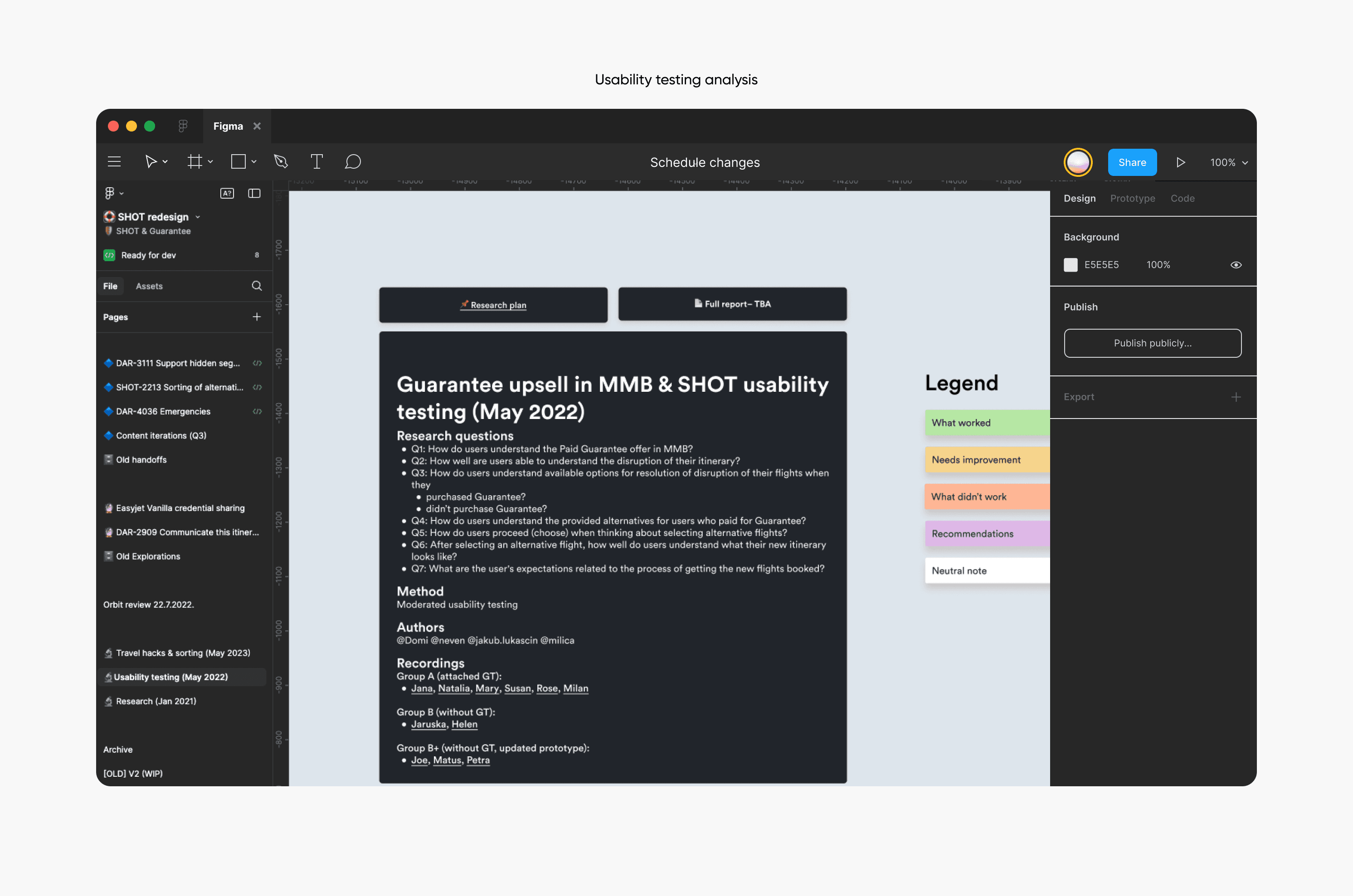
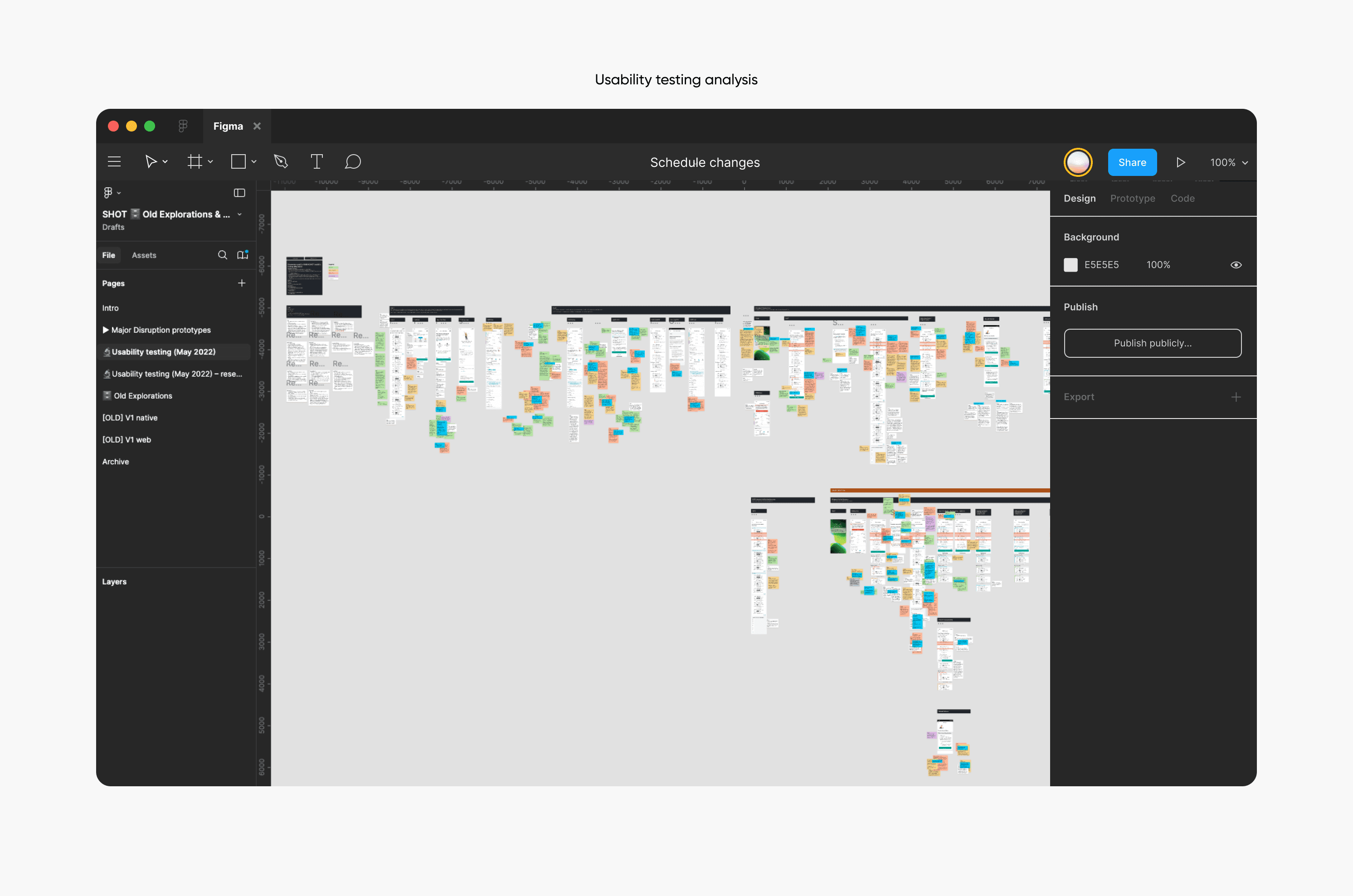
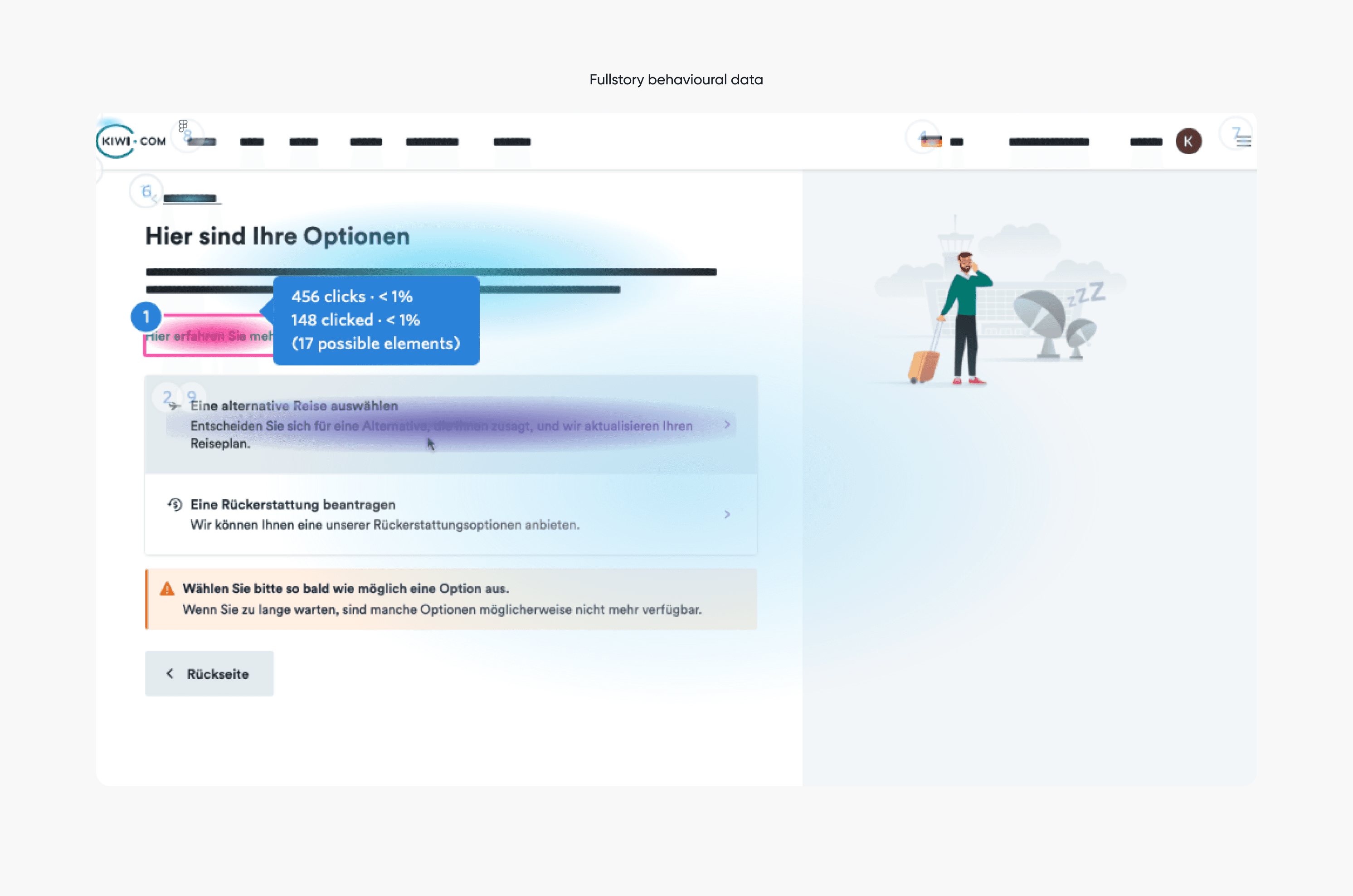
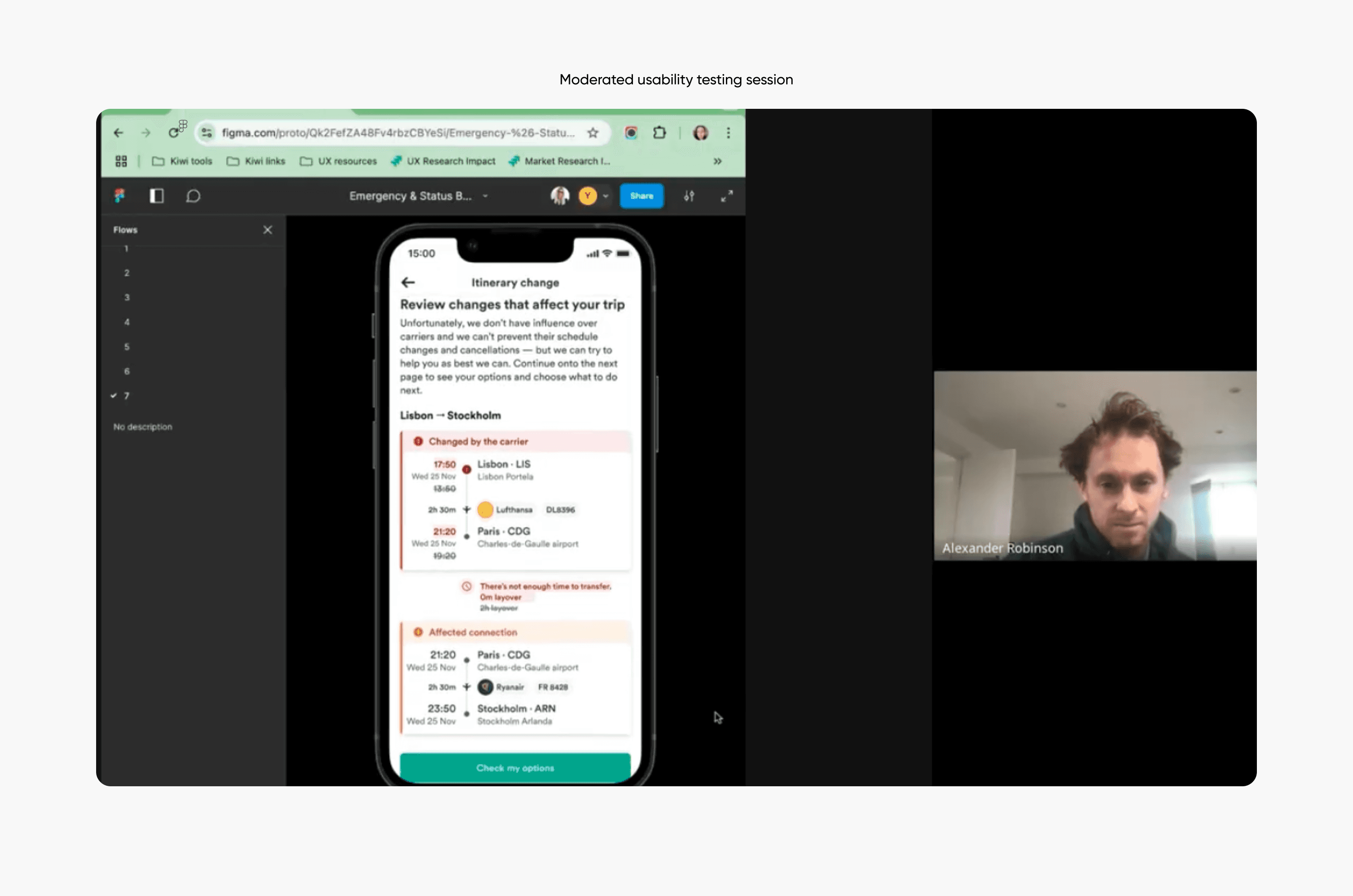
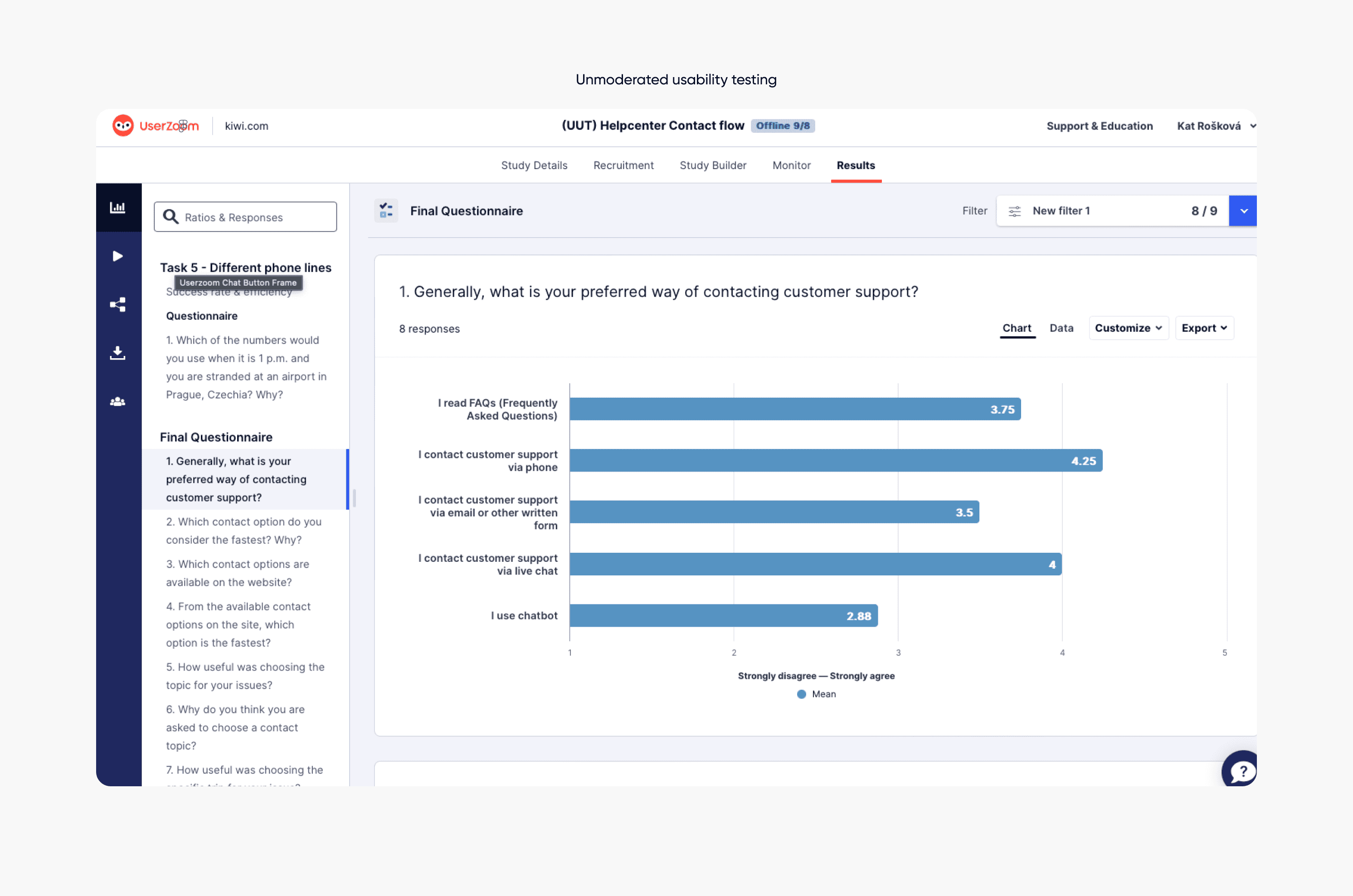
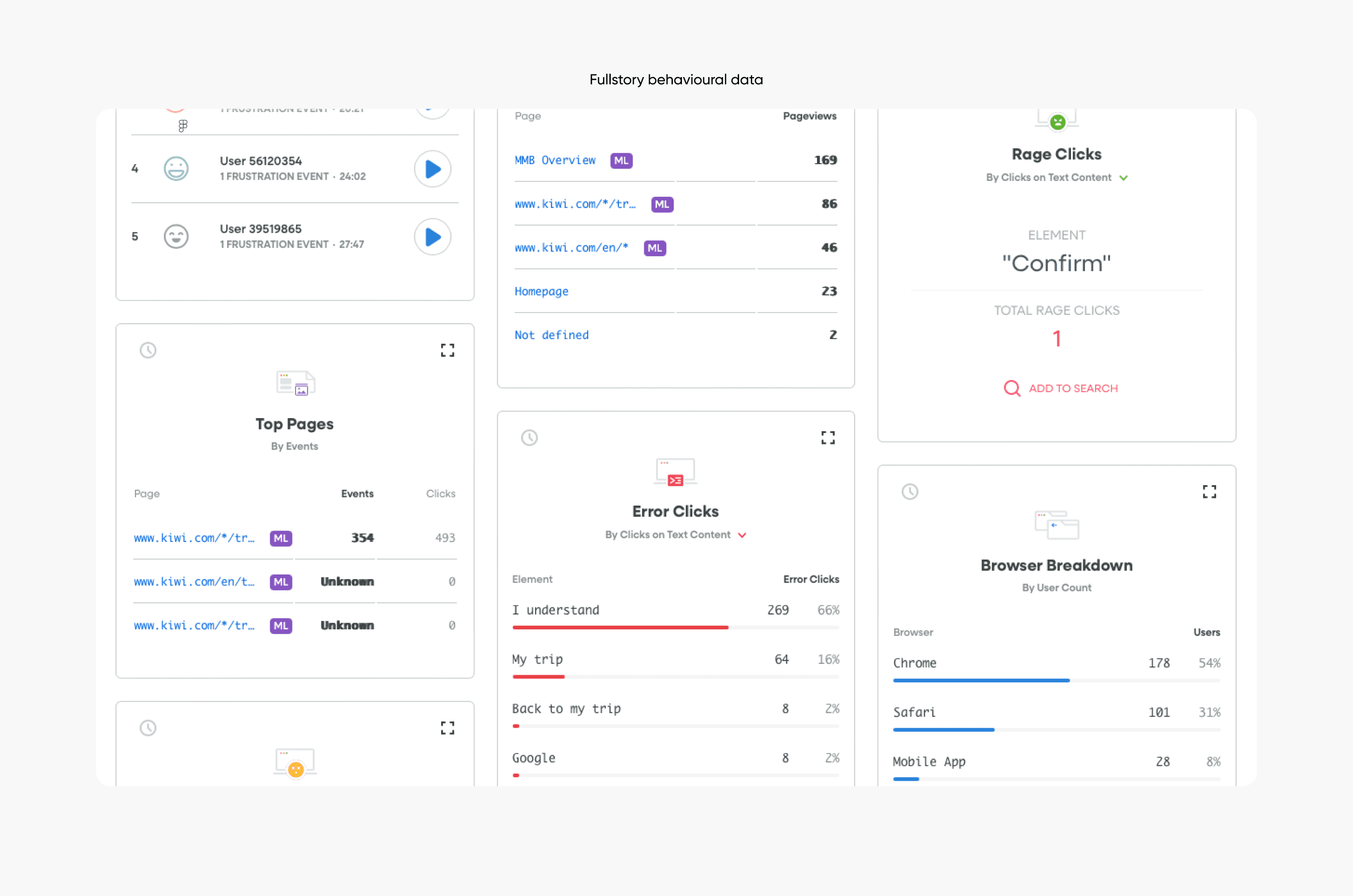
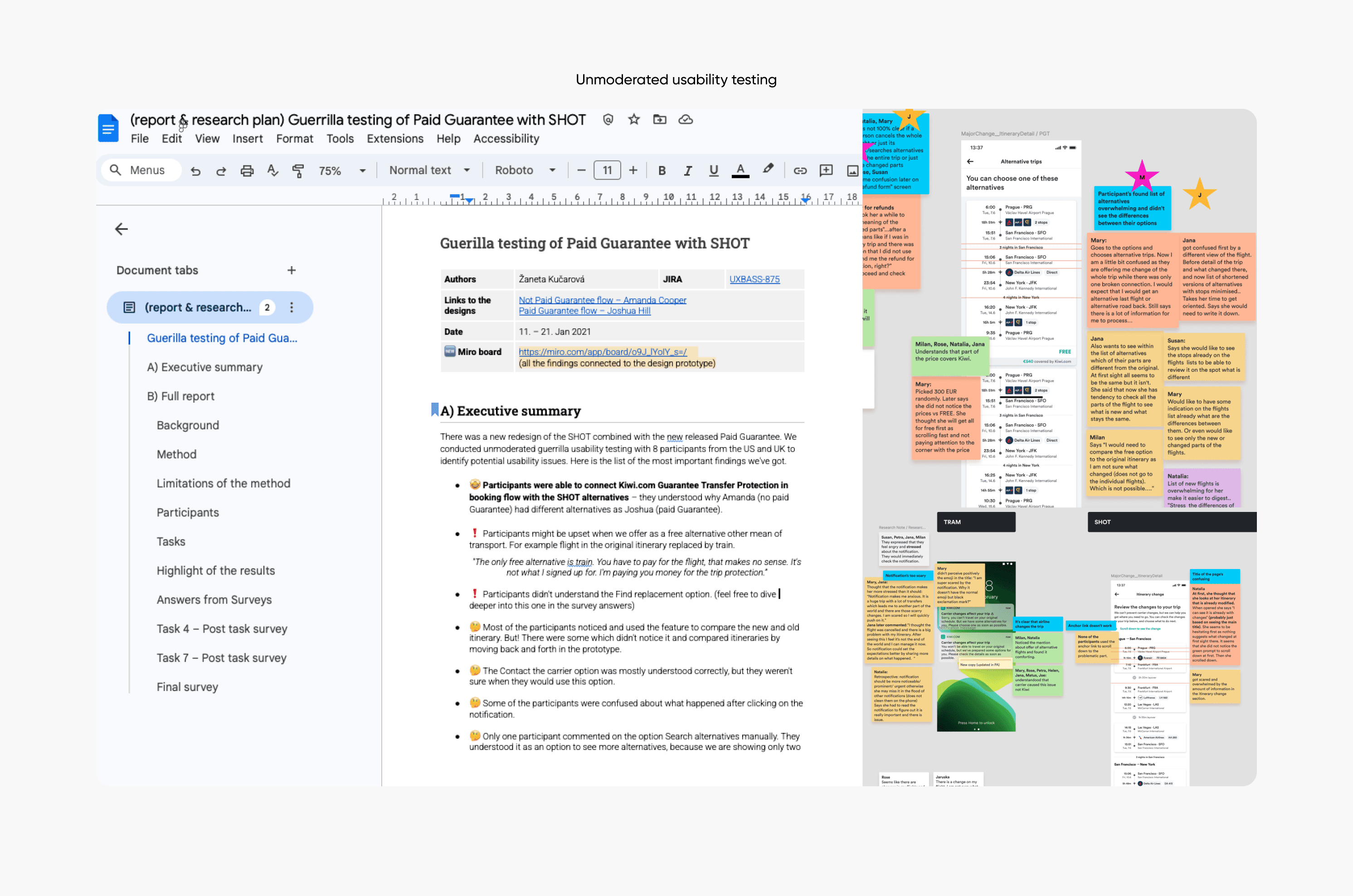
The old flow for managing airline schedule changes was confusing and outdated. Customers struggled to understand their options, and too many ended up contacting customer support. We needed a solution that has:
Clear communication and visual hierarchy – So customers immediately knew what had changed and what they could do next.
Align with design system (Orbit)
Support experimentation – New architecture that empowers us conduct A/B tests and other ways to collect data for further improvements.
Mobile-First – Since most disruptions happen when customers are already traveling.
Our goal was to redesign SHOT into a user-friendly, stress-free tool that made rebooking or requesting a refund smooth.
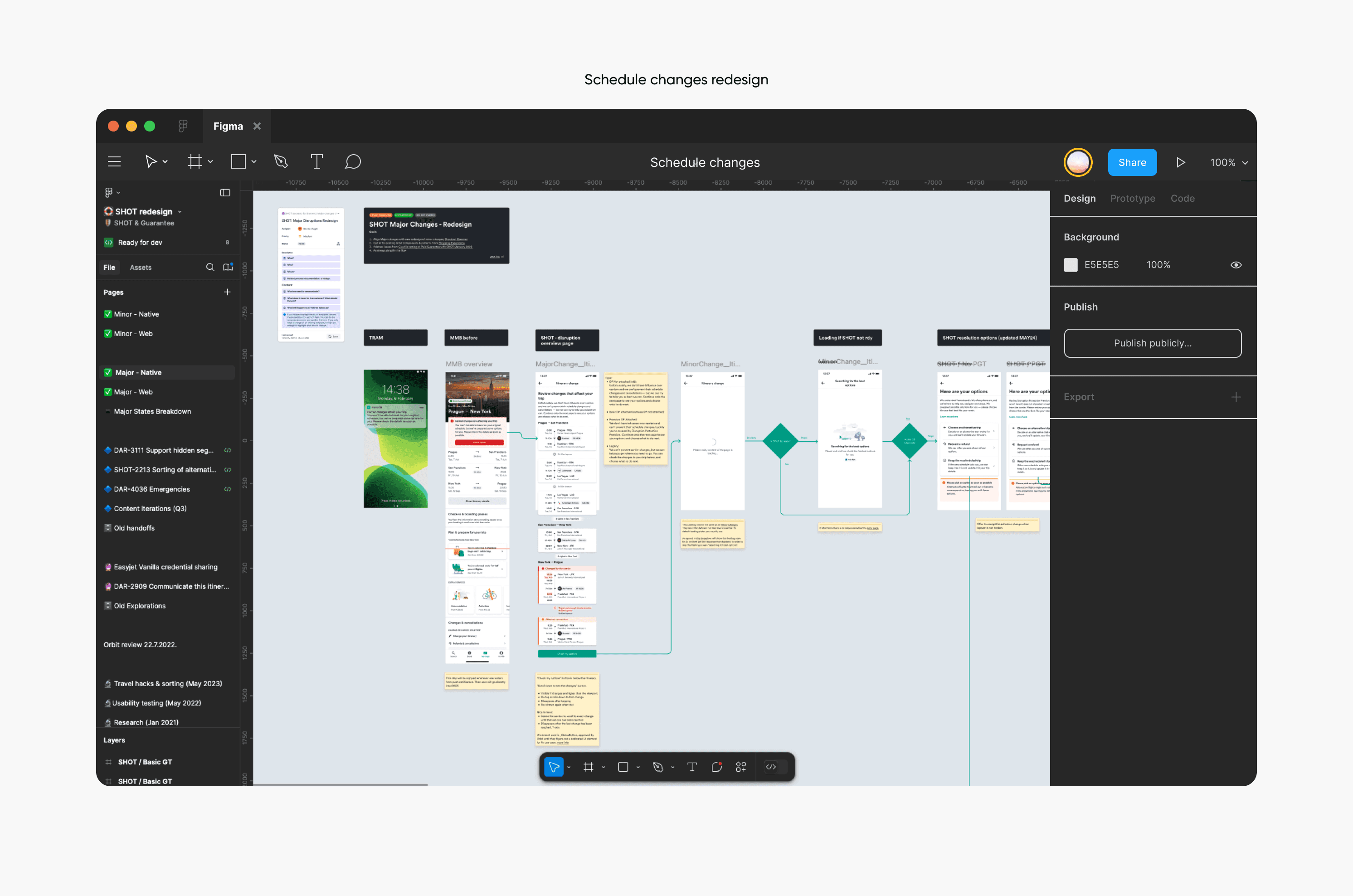
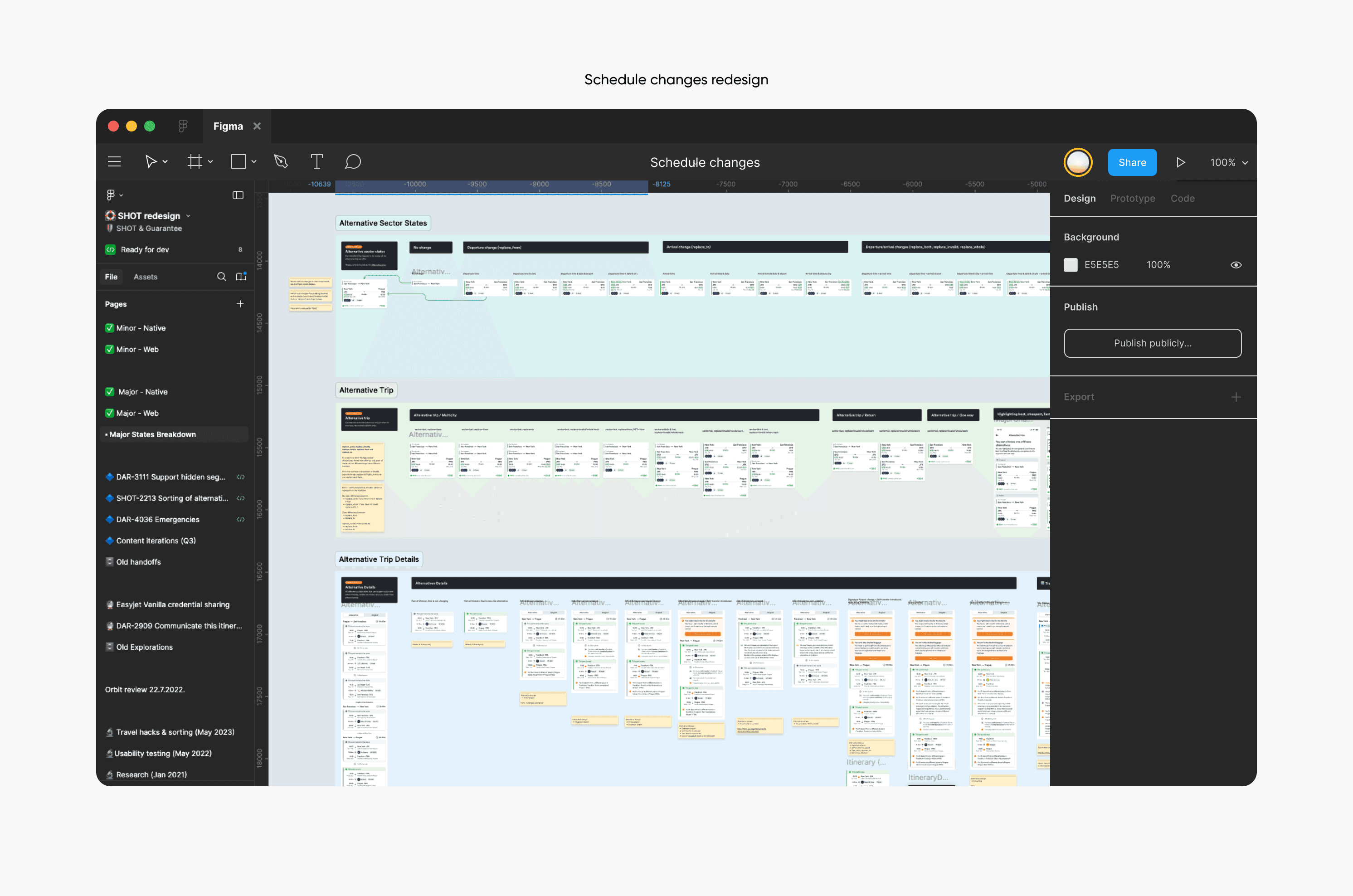
With strong research foundations in place, we launched an MVP to validate the redesign in a live environment. Even though it was an MVP, the feature had to be highly functional and reliable, as this is a sensitive flow for customers with little room for friction or confusion. Once live, we closely monitored analytics and session recordings to deepen our understanding of user behaviour and engagement, and continuously refined the experience based on both qualitative and quantitative feedback. We focused on moving from doubt to certainty by shipping thoughtful improvements in small, deliberate batches.
Below are a few of the more interesting challenges and iterations we navigated along the way.
Challenge #1
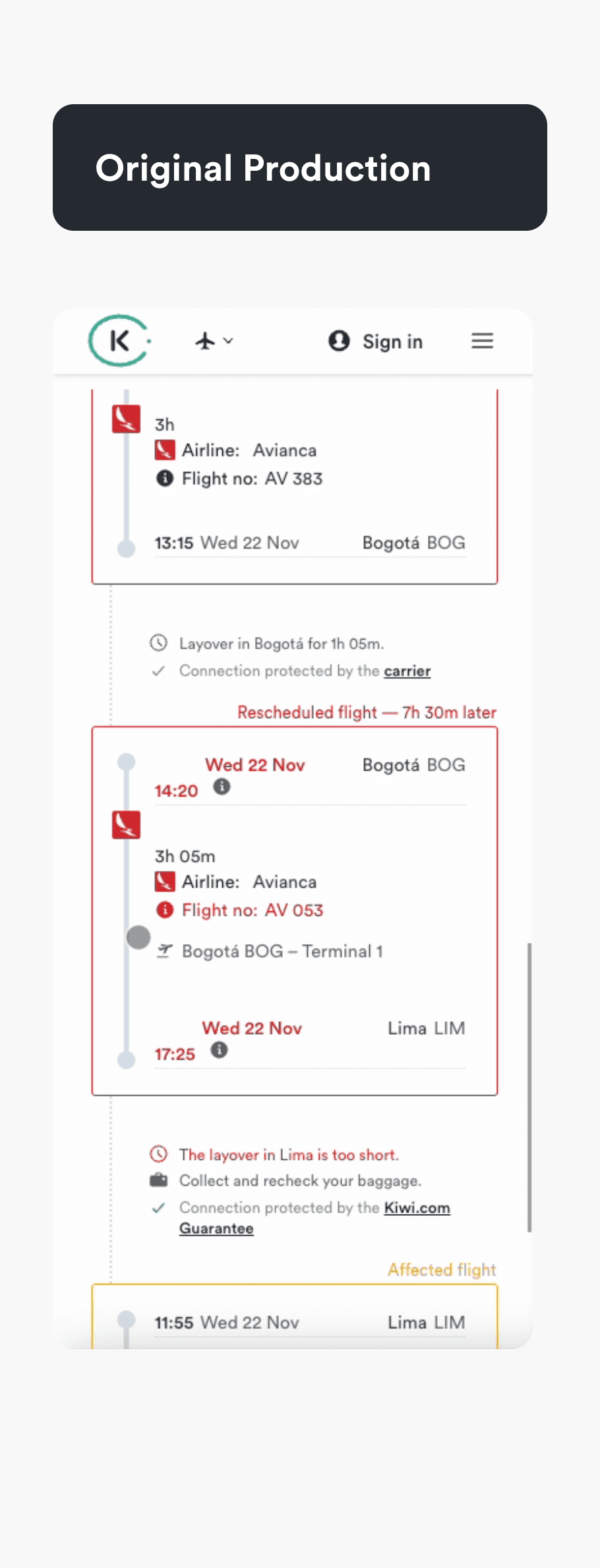
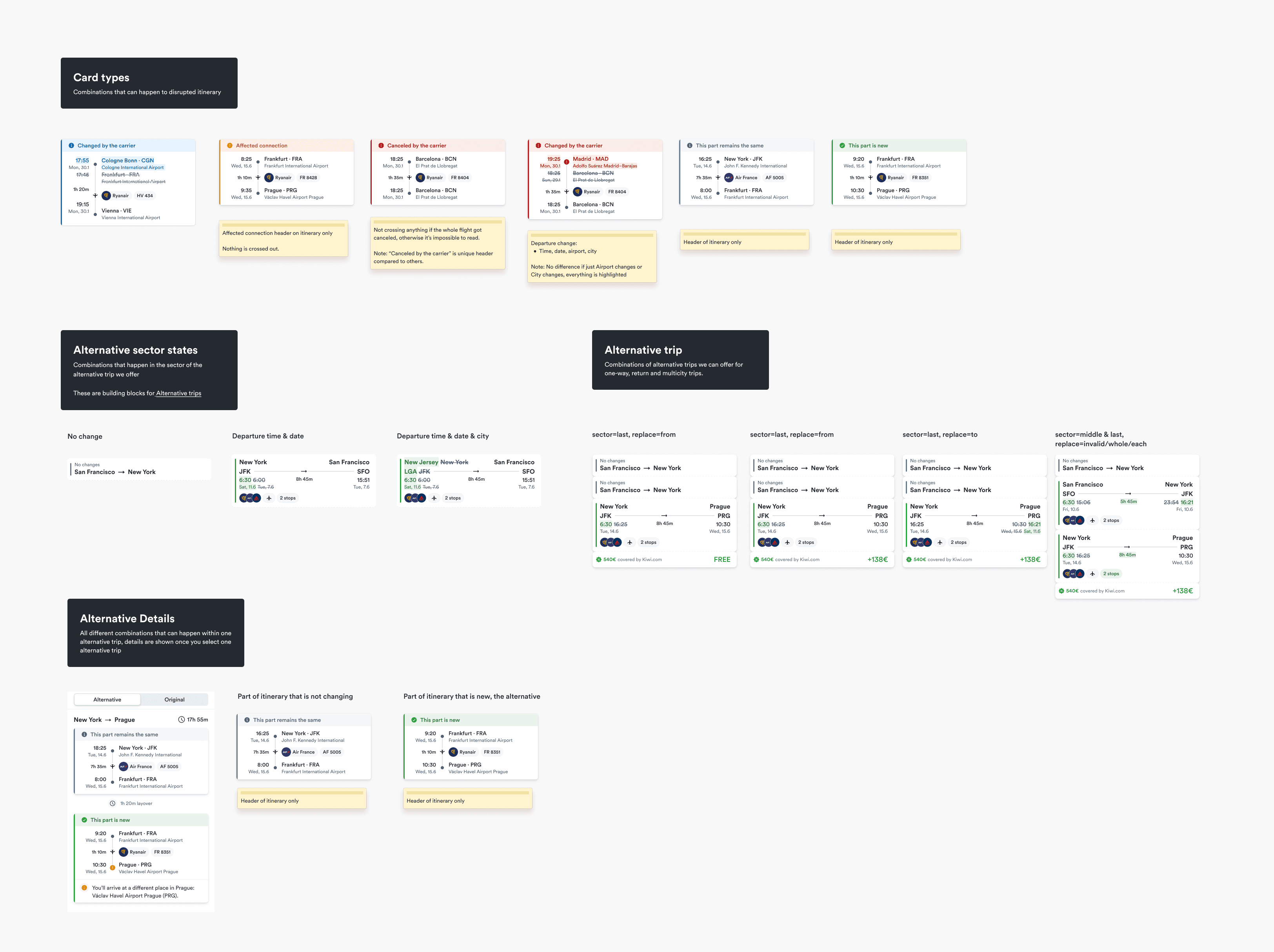
There were plenty of challenges during redesigning the experience of airline disruptions but one of the notable ones would definitely be designing the layout of result cards. This was ambitious because if all went well, this component had the potential to be reused in many different areas across product. Originally, the product used vertical layout which took way too much real estate, especially in mobile view. We collaborated heavily with the design system designers to come up with layout that could be clear, accessible and used universally,
Happy to say the launch became a catalyst for cross-domain alignment, with the new Itinerary result cards standardised and adopted across the platform. 🎉
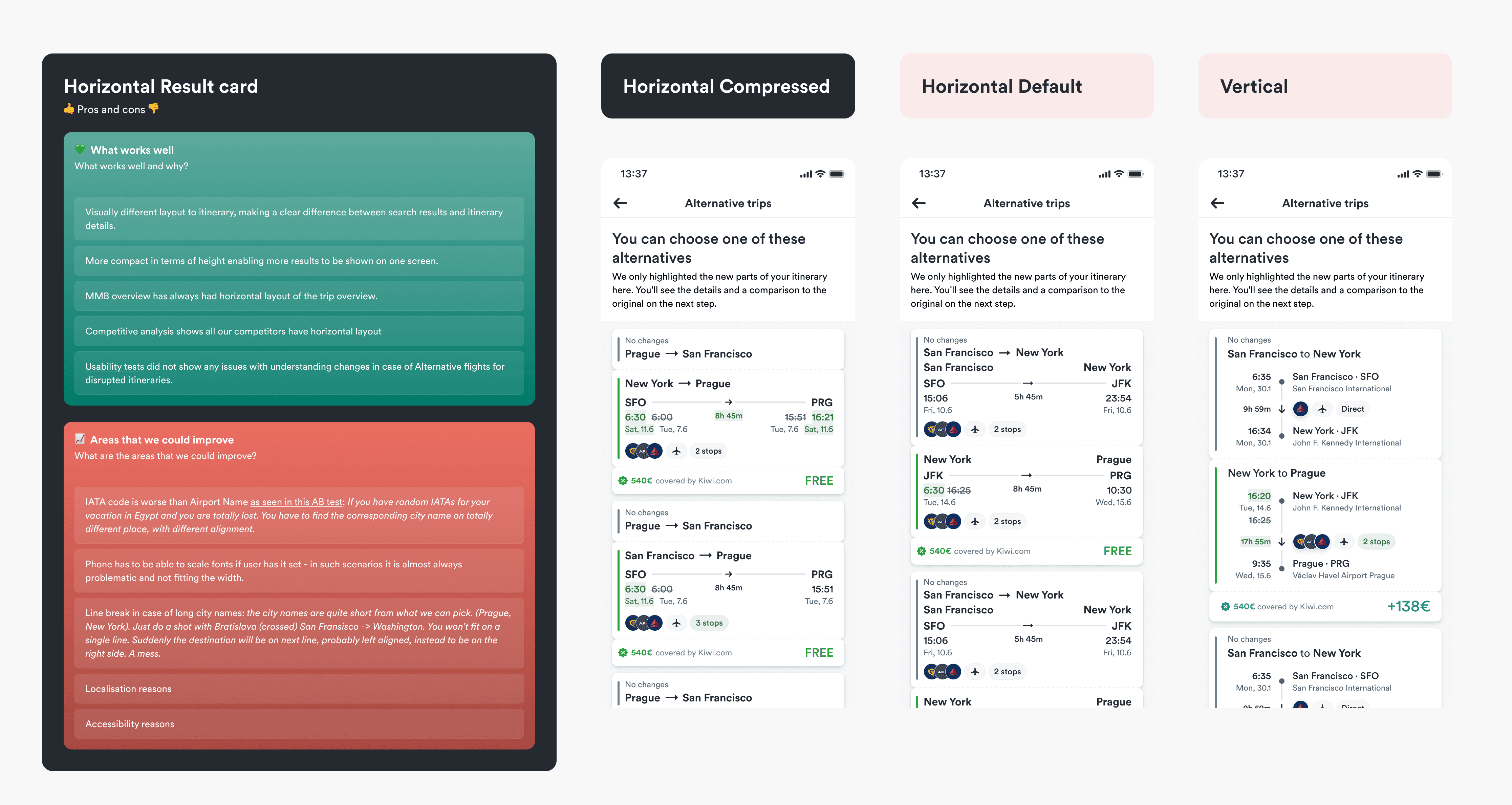
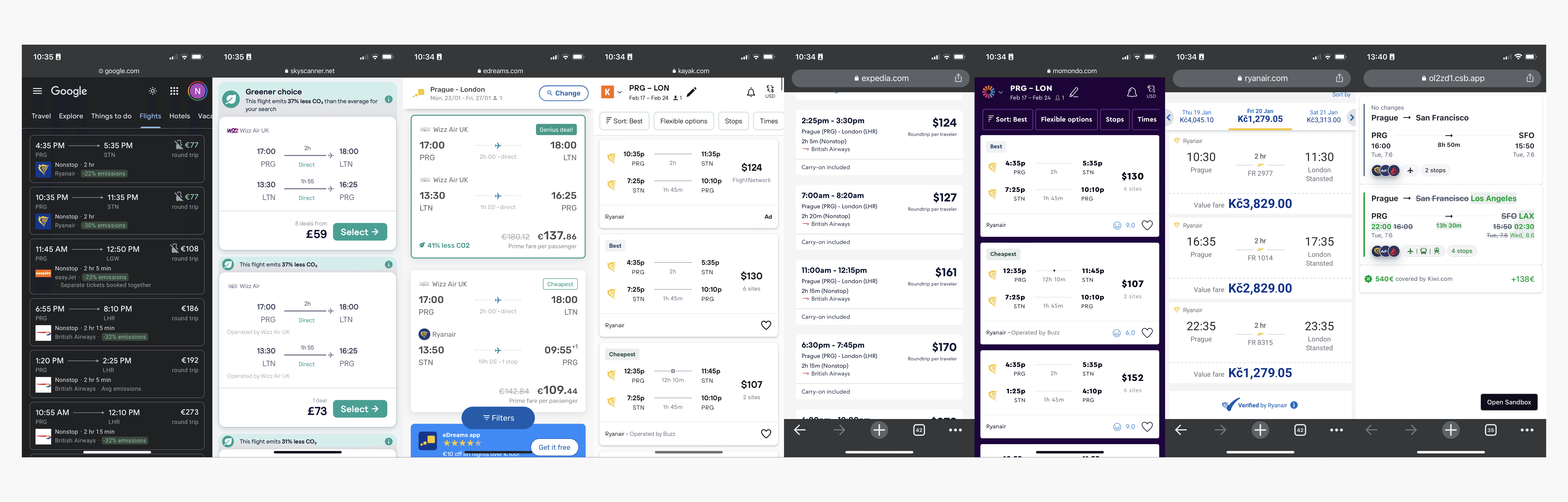
Benchmarking and competitors analysis help to guide us and understand what are the most frequent layouts that users are used to when searching for flights.
Challenge #2
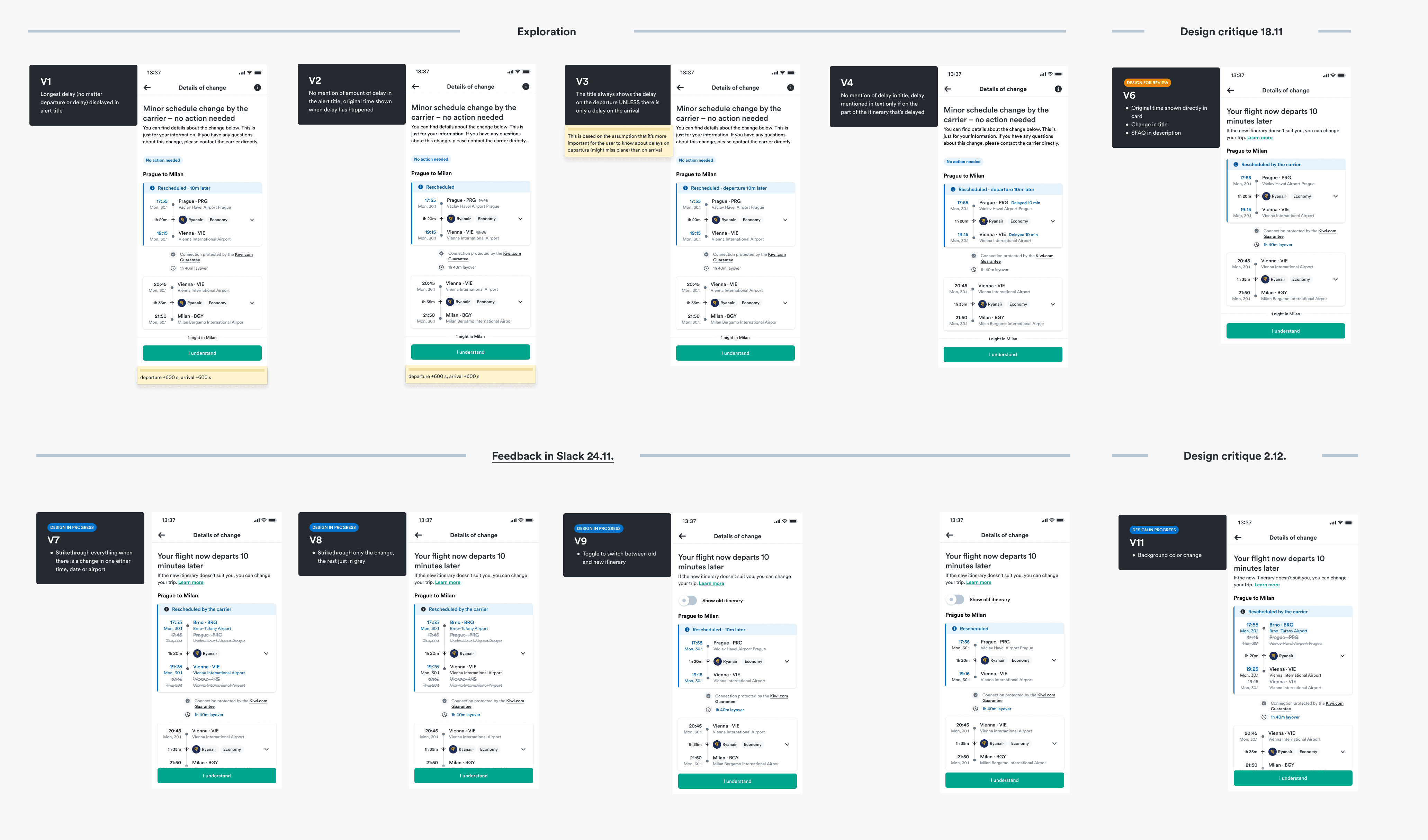
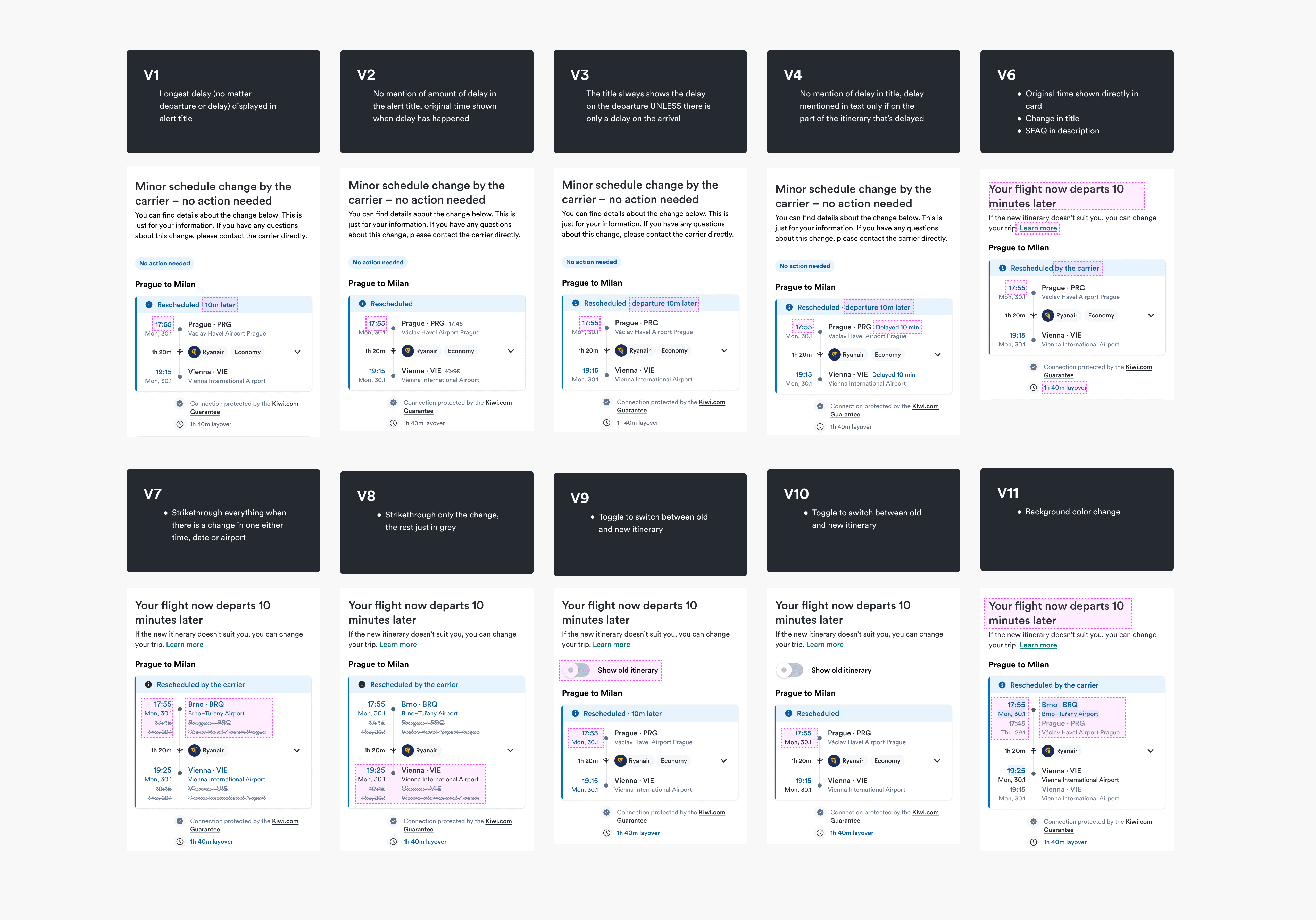
As a traveller, I want to know which part of my trip is delayed (departure or arrival) and how much it is delayed
so I can feel in control of my trip schedule and won’t misinterpret the given delays
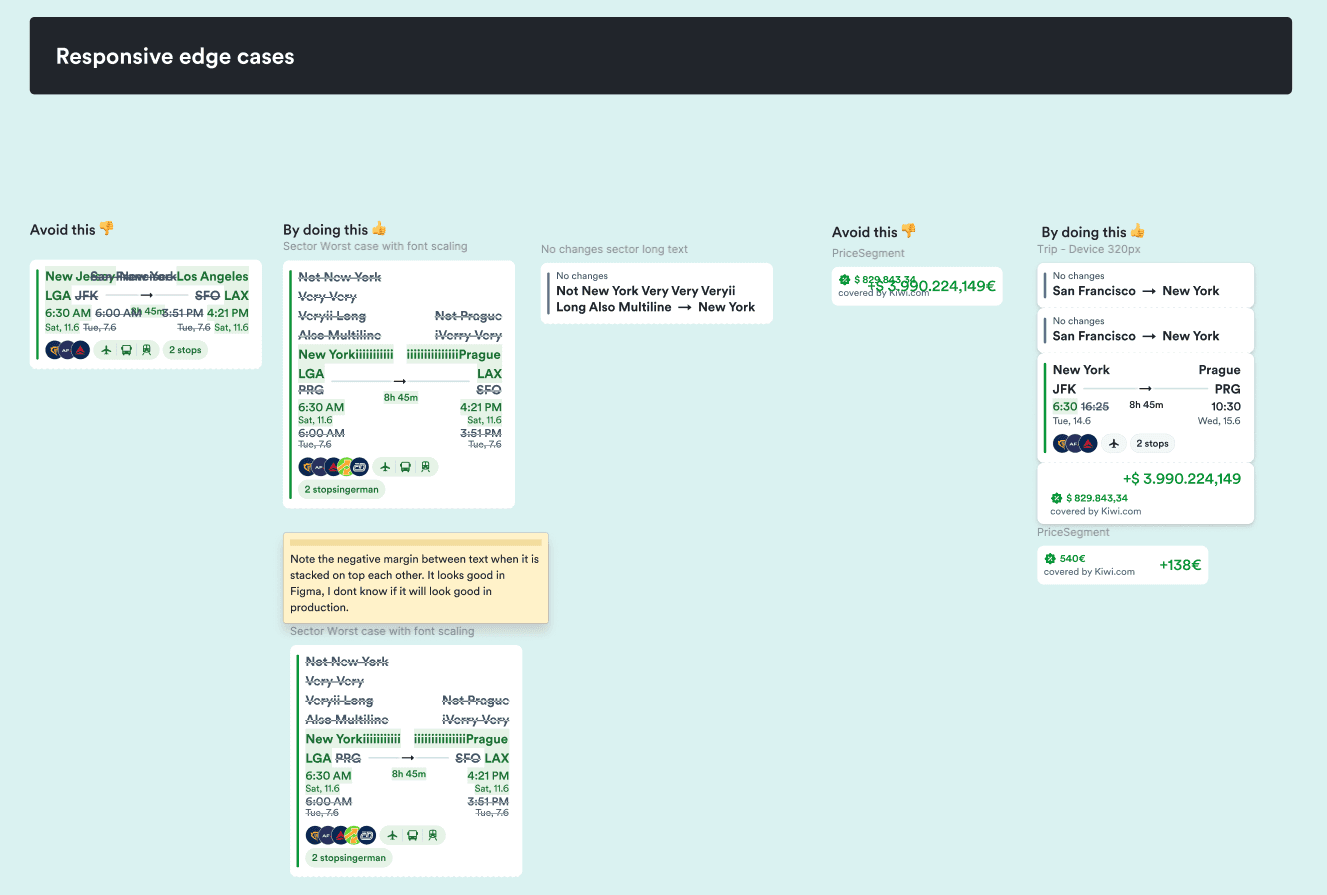
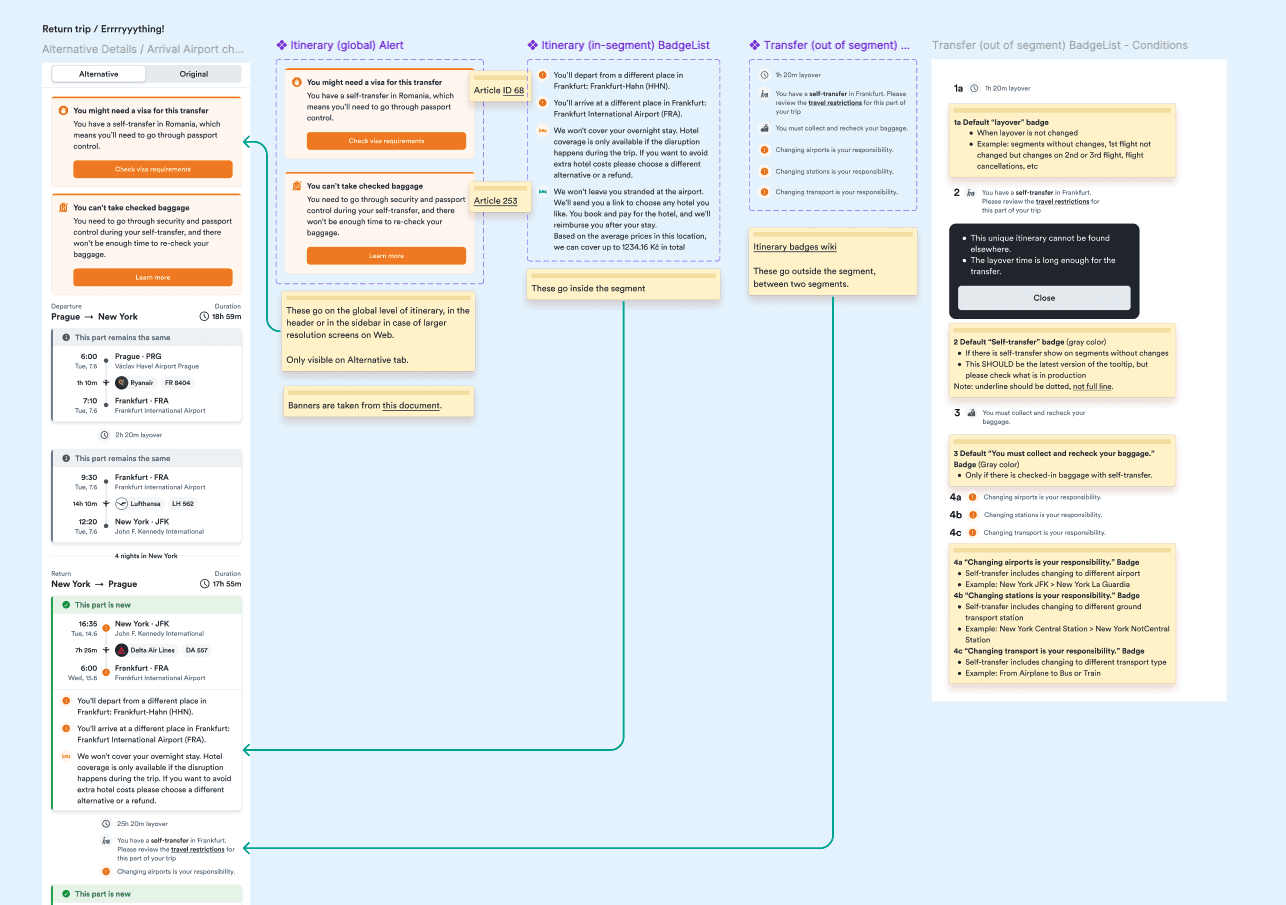
Below, you can see various exploration that we tested with users to find the right communication.
Challenge #3
Customers offered Kiwi.com Credit during disruption resolution were choosing the airline refund at a higher rate than expected.
We believed this was because customers didn't understand the value of credit over a direct refund. If we made the benefit clearer at the point of decision, more customers would choose credit.
MORE DETAIL COMING SOON


Reaching 62% of breaking disruptions resolved without support
Alignment with Orbit (Kiwi.com design system) while helping to improve existing components and patterns
Higher customer satisfaction scores for disrupted journeys.
Architecture that supports experiements, A/B tests, behavioral data tracking and overall faster iterations.
Designed by Kat • 2026