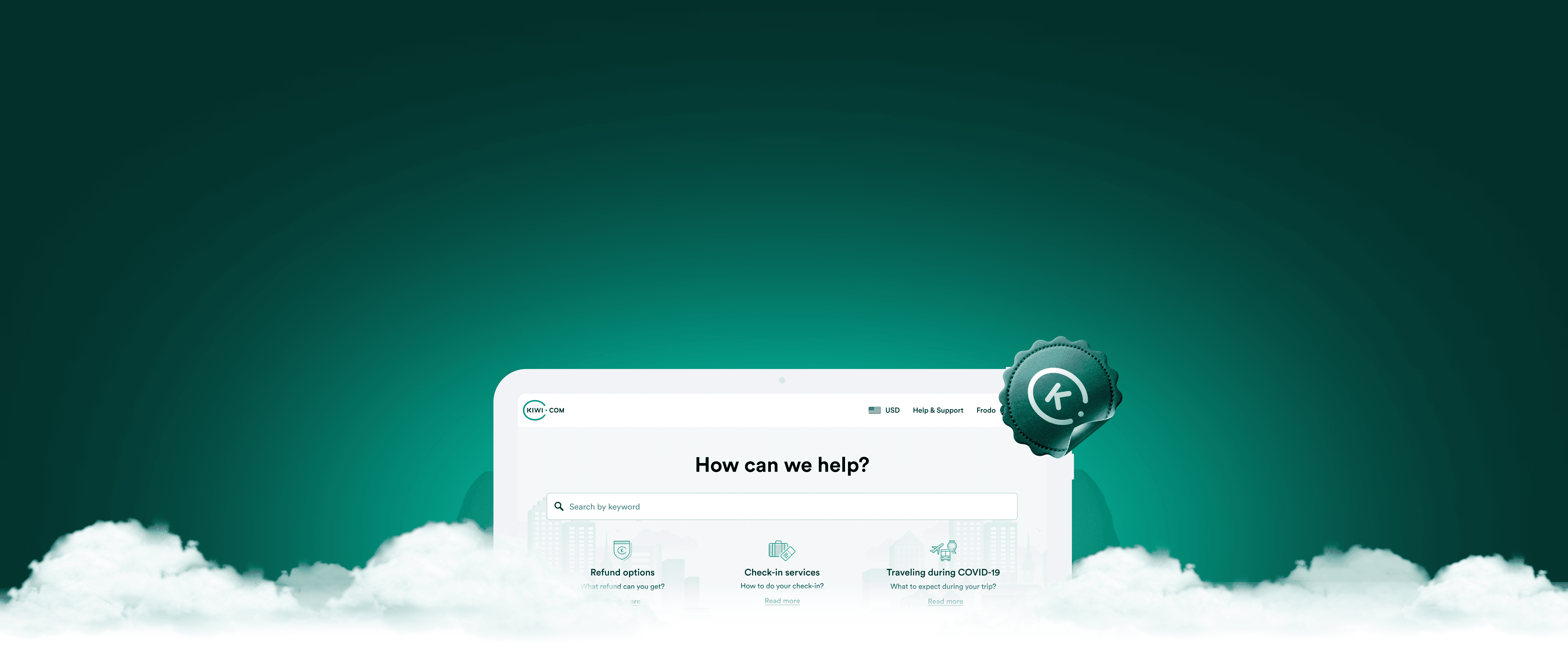
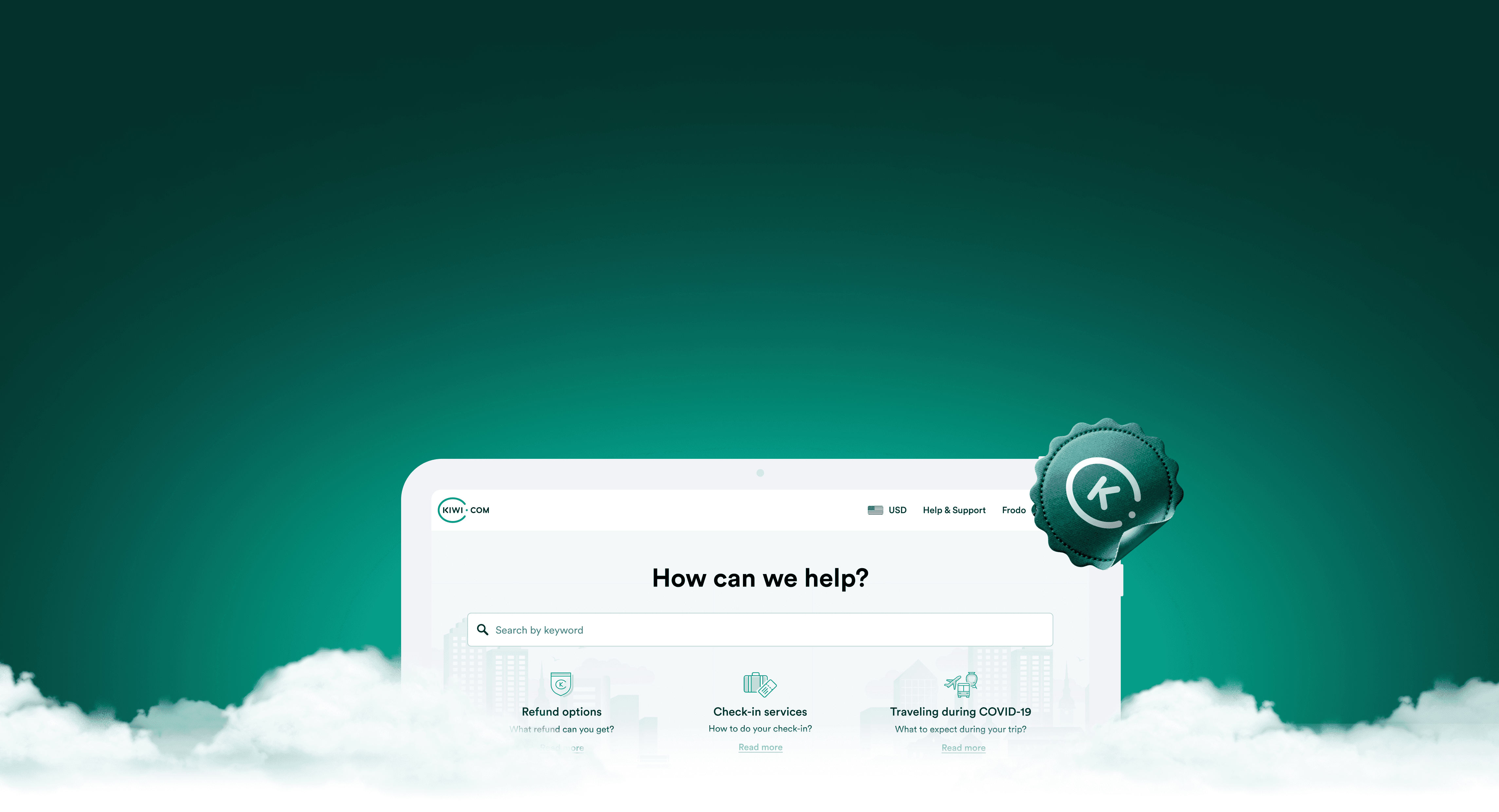
Kiwi.com's Help Center had grown into a maze. Navigation was unclear, the contact flow created unnecessary loops, and customers were reaching support simply because they couldn't find answers themselves. I redesigned the entire experience - restructuring the information architecture, simplifying the contact flow, and introducing an AI-powered chatbot in 11 languages. The result: 10% fewer CS contacts, €20,000/month saved in operational costs, and measurably improved customer satisfaction.
My Role:
Product Designer
Team
Product Manager
2 Engineers
Data Analyst
Customer Support Operations
Ux Researcher
Scope:
End-to-end redesign and
further iterations
Kiwi.com is a global flight booking platform selling 50,000+ seats daily.
Navigating support shouldn't be a maze.
When the pandemic hit, customer support at Kiwi.com was overwhelmed, leading to quick-fix solutions that, over time, turned the Help Center into a maze. Navigation was unclear, content was scattered, and the “Contact Us” flow was more frustrating than helpful. Customers felt it, and so did we. As the Product Designer leading the Help & Support domain, I took on the challenge of rethinking the entire Help Center - making it intuitive, accessible, and scalable.
The goal was ambitious: restructure the information architecture, simplify the support flow, and introduce an AI-powered chatbot that could provide instant, personalized help in 11 languages. The result? A Help Center that was easier to use, reduced unnecessary support contacts, and saved €20,000 a month—all while improving the experience for travelers needing assistance.
We started by diving deep into the data - customer feedback, support tickets, session recordings, and heatmaps - to pinpoint where users got stuck. The results weren’t surprising: information was hard to find, the contact flow had too many unnecessary steps, and users often resorted to contacting support simply because they didn’t know where else to go.
A competitive analysis confirmed our suspicions: while other travel platforms were moving toward modular content and AI-driven support, our Help Center still felt rigid and outdated. We needed to rethink everything, not just tweak the surface.
Reworking the Information Architecture
The first step was breaking down long, overwhelming help articles into structured, digestible modules. Instead of static pages, we designed a dynamic system where users could quickly find relevant answers without wading through unnecessary details. This also helped improve SEO and internal linking, making support content more discoverable.
Fixing the “Contact Us” Flow
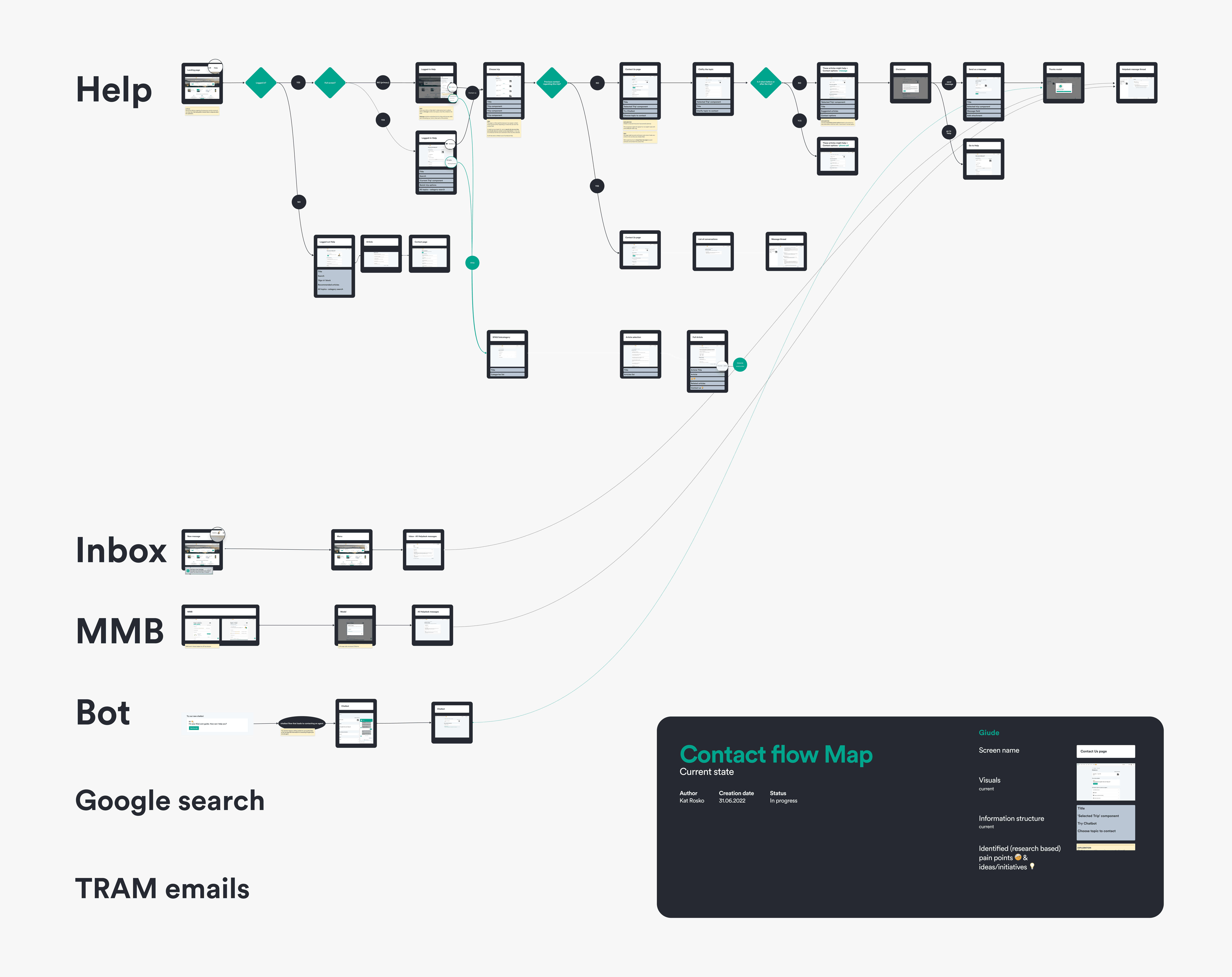
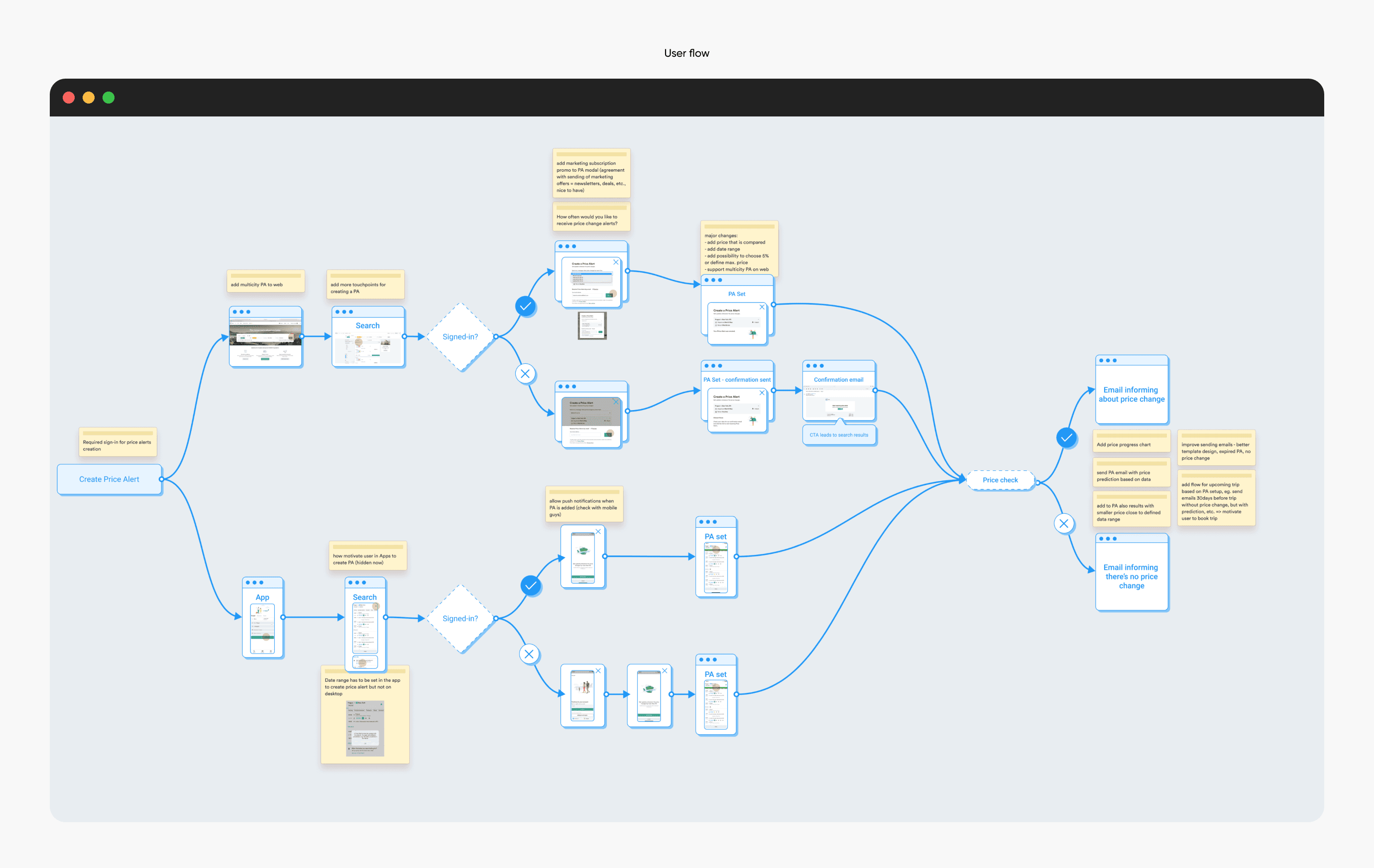
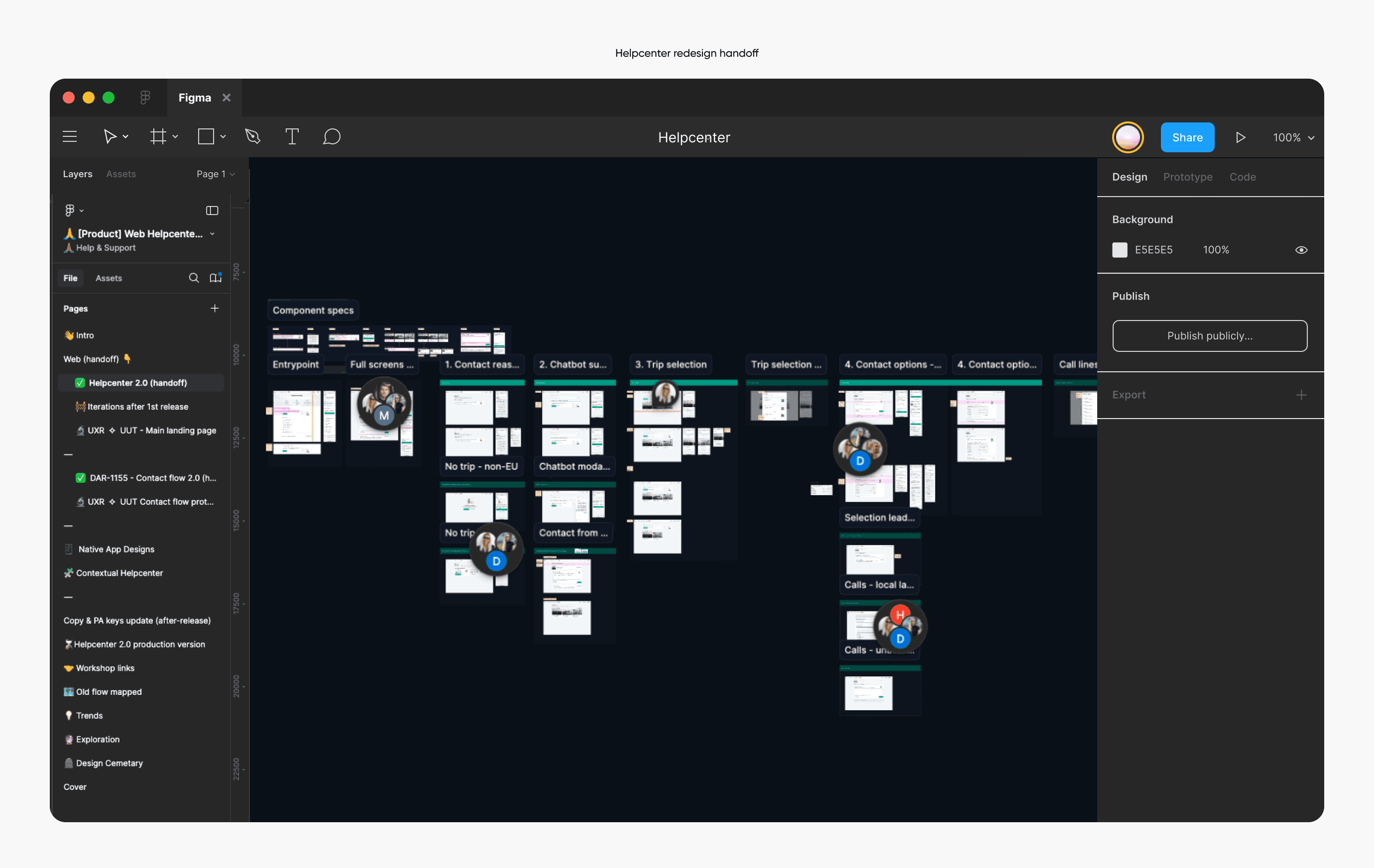
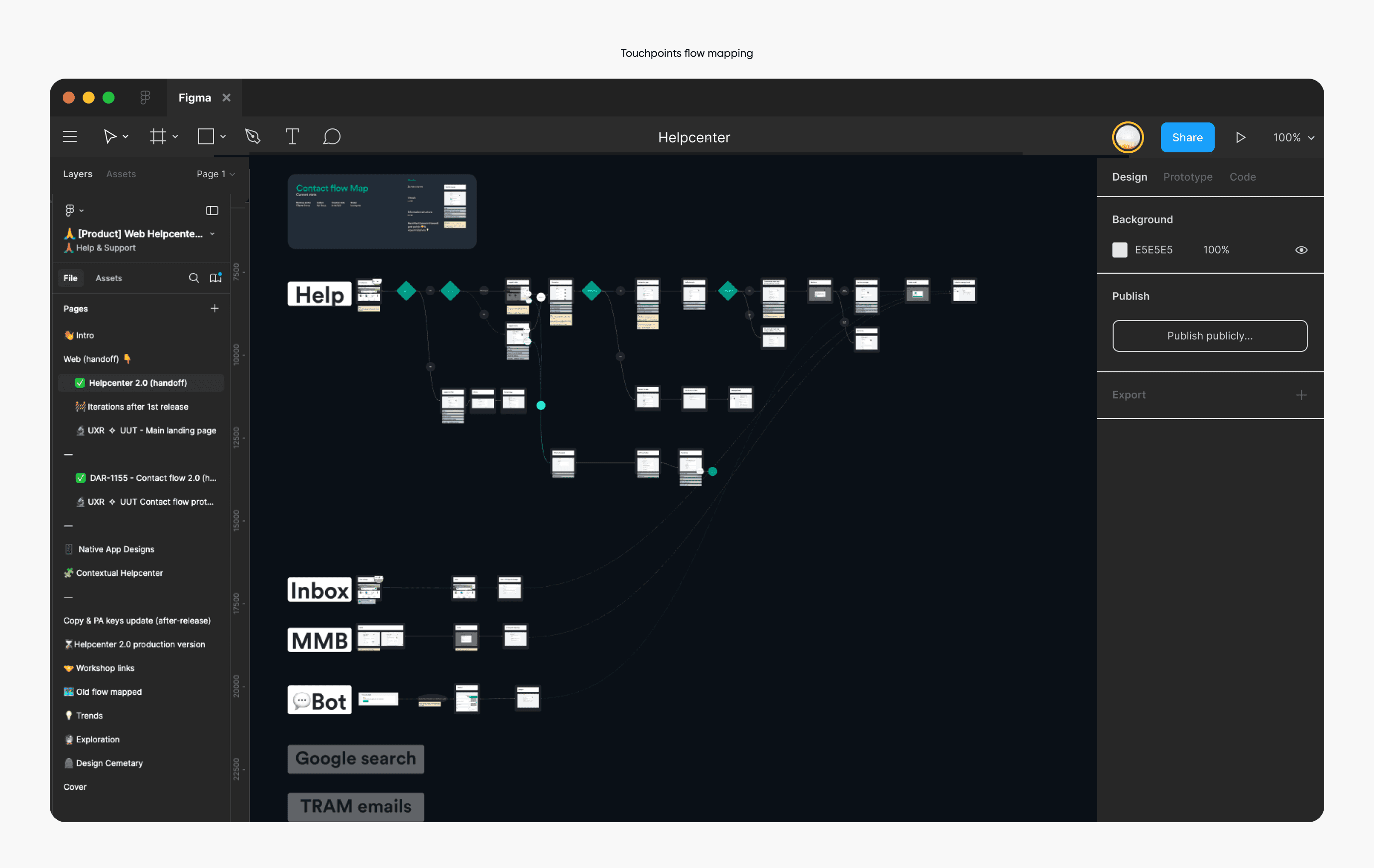
Next, we tackled the biggest frustration: the contact flow. The old design led users through unnecessary loops, often presenting the same options repeatedly. We streamlined the process, ensuring that customers only saw relevant choices based on their issue.
The result? A smoother, more intuitive path to the right kind of support.
Introducing a Conversational Chatbot
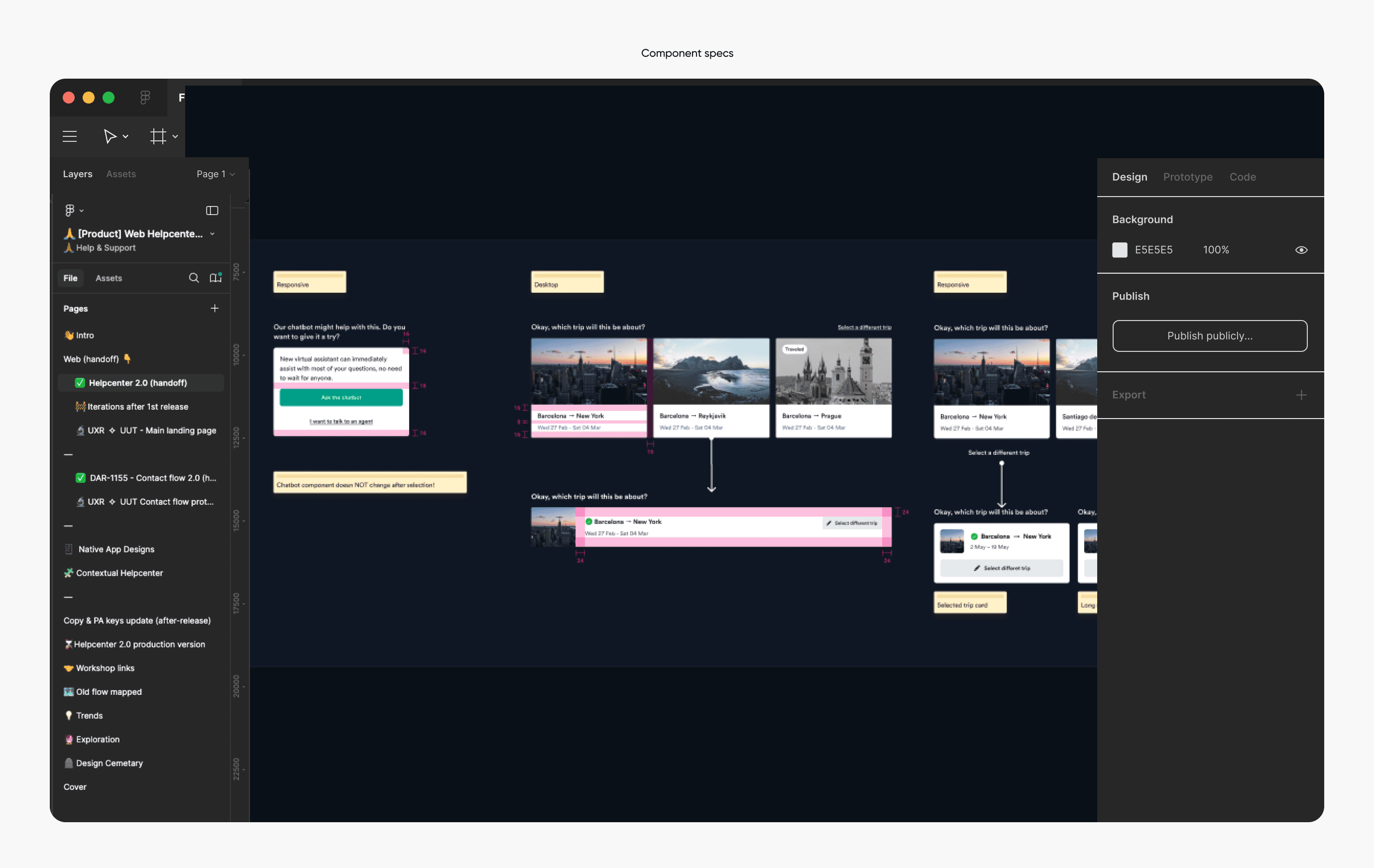
One of the most exciting parts of this redesign was integrating an AI-powered chatbot. Instead of a static FAQ bot, we designed a conversational experience that guided users to the right answers and escalated to a human agent only when necessary. It spoke 11 languages, providing instant, localized support across key markets.
Prototyping & Testing
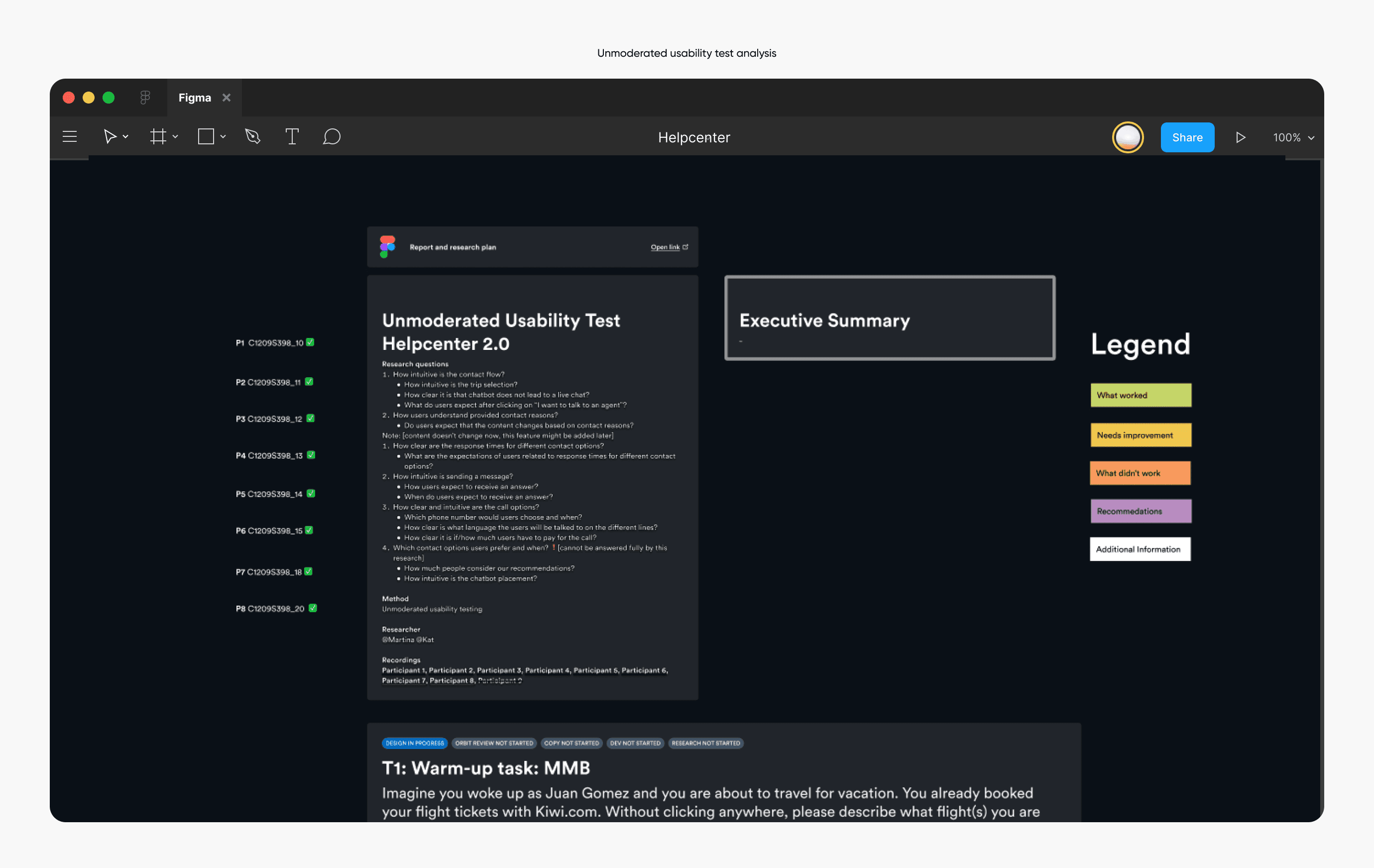
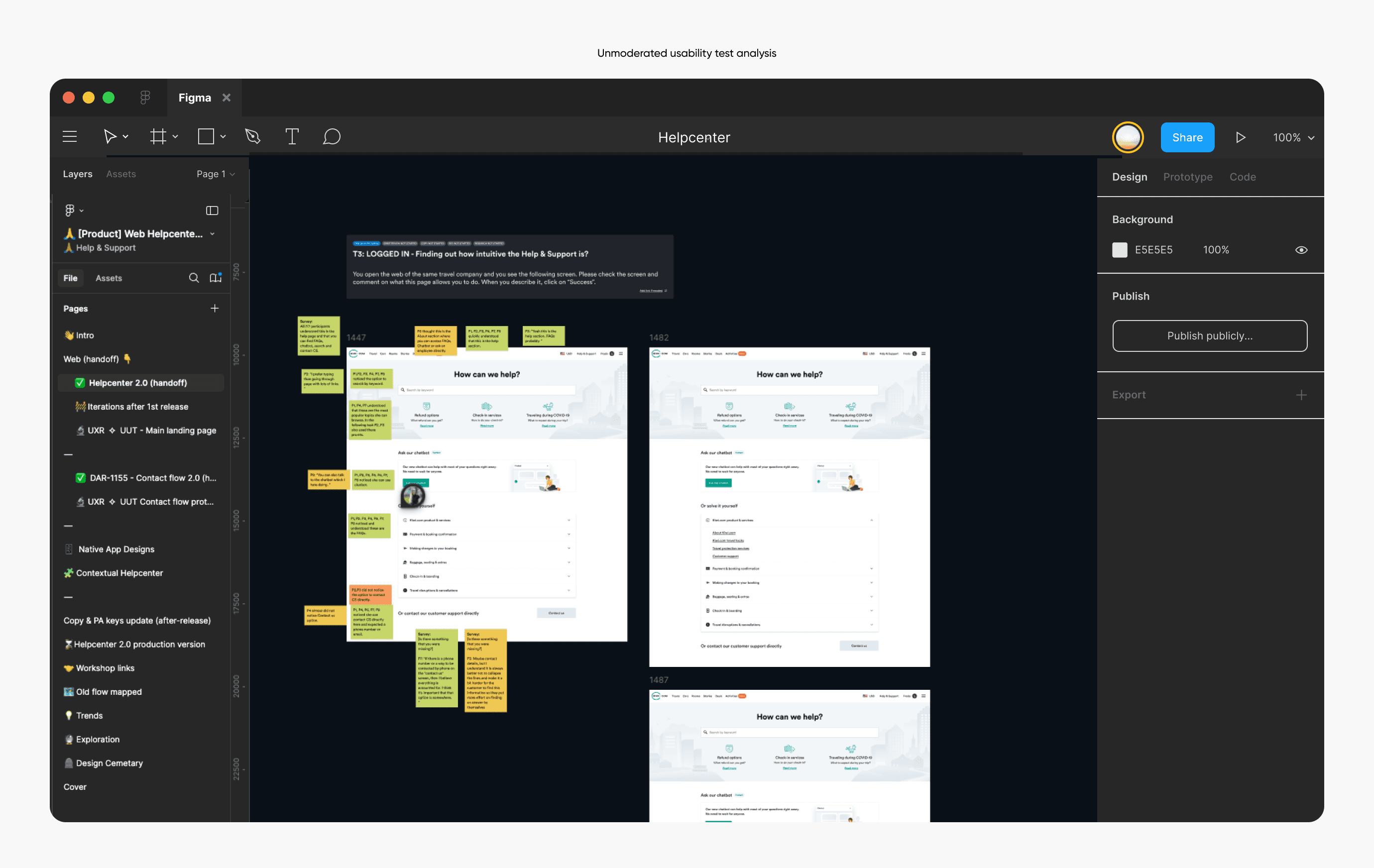
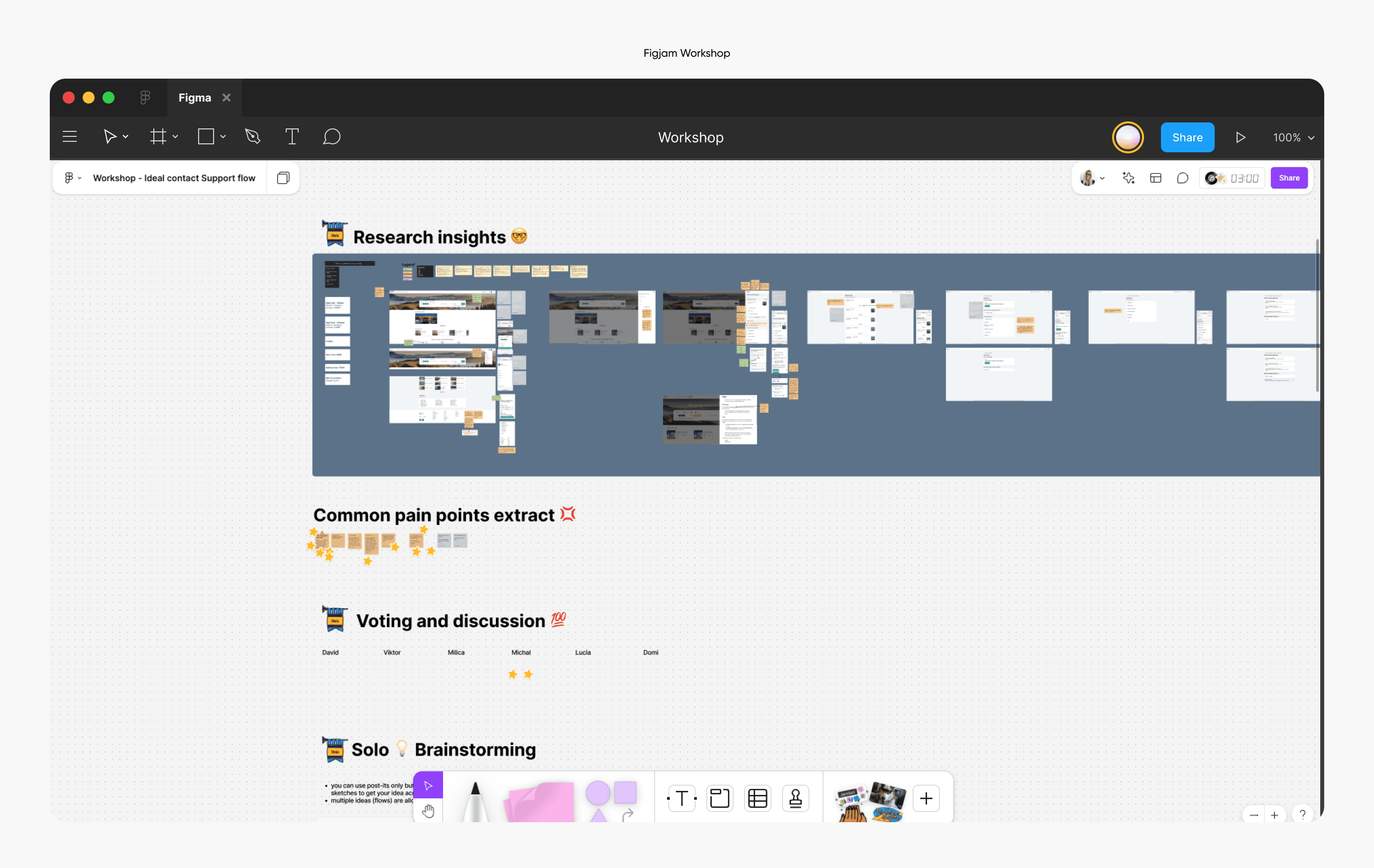
With our new structure in place, we moved into rapid prototyping and testing. High-fidelity prototypes were put in front of real users to validate navigation patterns, chatbot responses, and overall usability. Each testing round helped refine the flow, ensuring that every interaction felt intuitive and helpful.
Collaborating Across Teams
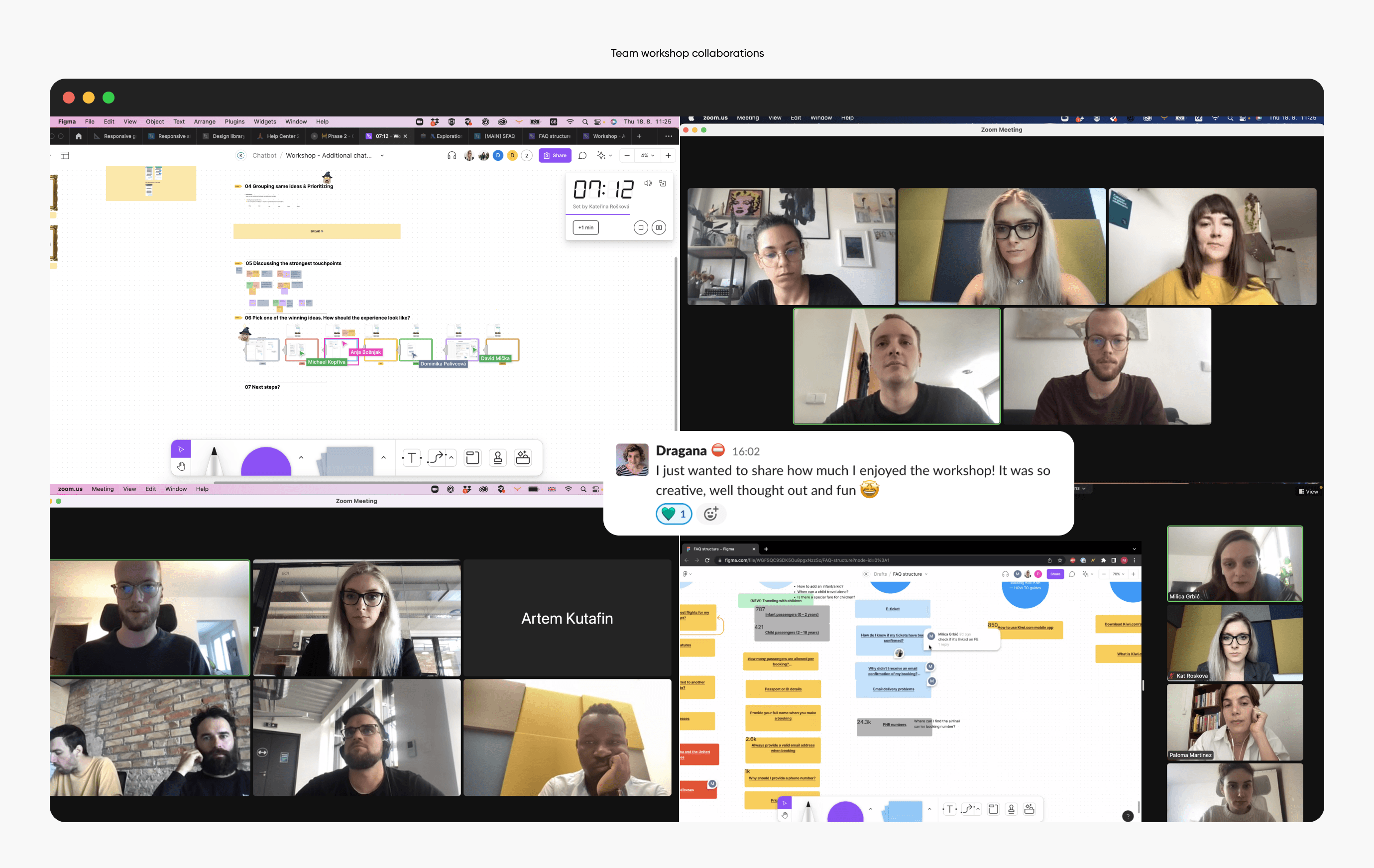
This wasn’t a solo effort. Aligning with the CS team helped us balance automation with human support, while close collaboration with engineers ensured feasibility. Since we were introducing new patterns, we worked with design system leads to make sure everything stayed consistent without limiting innovation.
Phased Rollout & A/B Testing
To minimize risk, we launched the redesign in phases - first the main Help Center page, then the new contact flow, and finally the chatbot. A/B tests showed measurable improvements at every stage, validating our approach and allowing for continuous iteration.
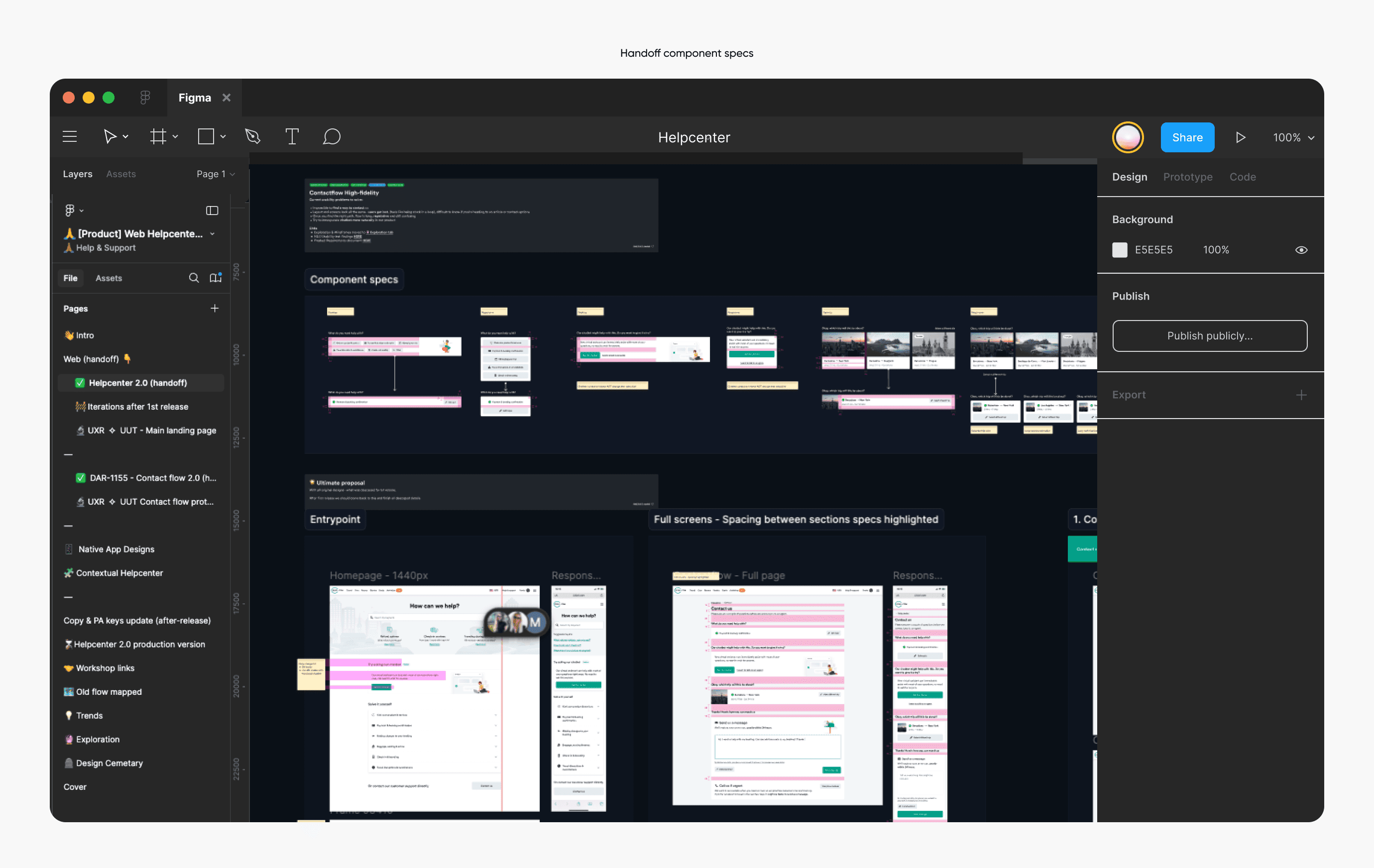
A modular, structured Help Center for faster access to information
A streamlined “Contact Us” flow, reducing friction and improving guidance
An AI-driven chatbot offering real-time, personalized support in 11 languages
A design system-aligned UI that balanced consistency with innovation
The impact was immediate:
10% reduction in CS contacts, proving that users could self-serve more effectively
€20,000/month saved in operational costs
Improved customer satisfaction, with fewer complaints about navigation and support accessibility
This project wasn’t just about fixing a Help Center - it was about rethinking how users seek support and making that process as seamless as possible. The result was a smarter, more scalable Help Center that not only reduced operational costs but also made life easier for travelers navigating unexpected disruptions. And at the heart of it all was a design process that put real users first.



Designed by Kat • 2026